Showing posts with label Bible Study. Show all posts

Thursday, February 23, 2012

Apologia: Who Am I?; a TOS Crew Review

I had high expectations for "Who Am I? And What Am I Doing Here?" from apologia. Everything that I have seen from apologia educational ministries, inc., has been solid, from the visually beautiful layout of the materials to the quality of the information inside.

My expectations are met and exceeded with "Who Am I?".
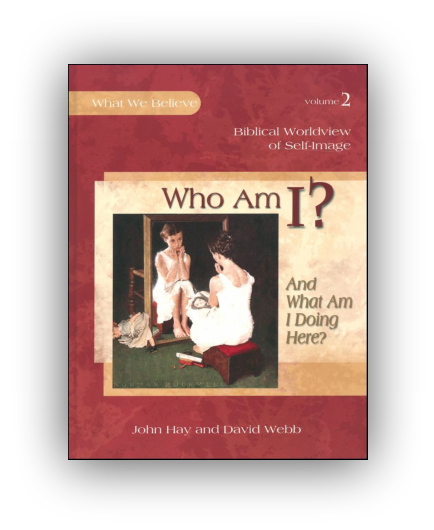
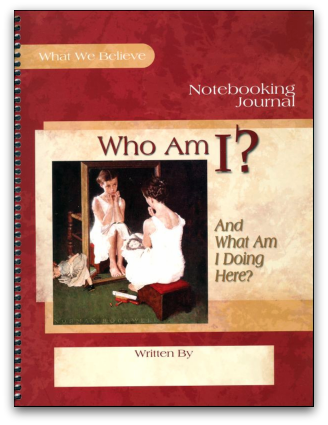
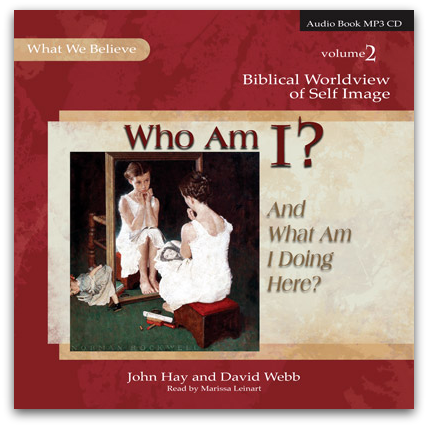
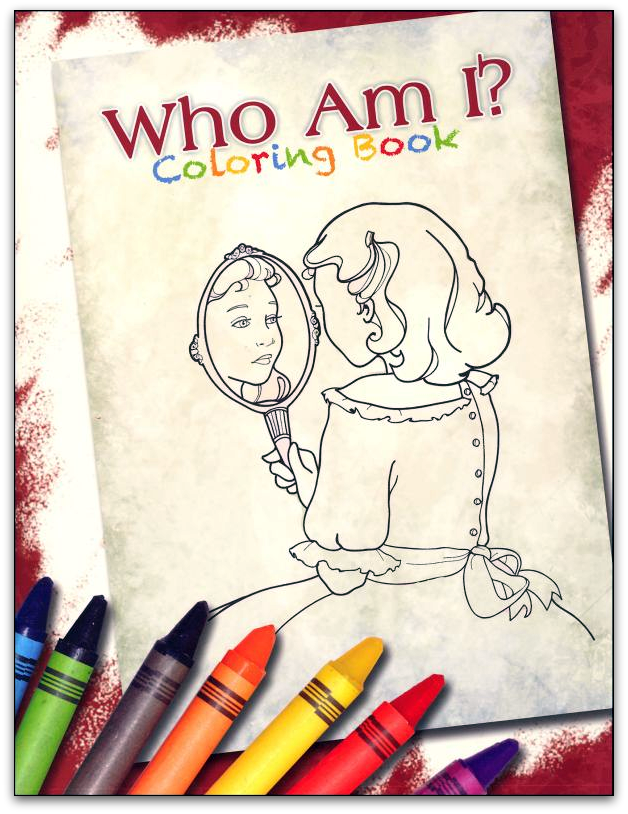
Photobucketapologia sent my family a huge package of "Who Am I?" resources to review. We were given the hardback textbook ($39.00); the notebooking journal ($24.00); the audio CD ($19.00); and the coloring book ($8.00).
Photobucket
The textbook is another one of apologia's sturdy hardbacks; 8 lessons (chapters) in 262 pages. Rather than describe each lesson, I will direct you to a sample lesson, here. You will be able to see for yourself the layout, the quality, the reading and comprehension level needed as you think about your homeschoolers' abilities.

The table of contents is here. apologia materials suggest that the lessons are geared for students ages 6-14, quite a large age range, in my opinion, and based on my limited experience, would consider them for mature 8 or 9 year olds or for the older end of the age range.

Who Am I? from the What We Believe series teaches children "what it means to be fearfully and wonderfully made in the image of a loving God." apologia uses a variety of Biblical translations but uses NIV more heavily than other choices. apologia recommends that families use their favorite translation for scripture memory within this study.

***The first lesson includes a story about a child with a disability.***
I think all of us will relate to the child in the story with some physical differences, and children with a disability will especially relate to this child. Well done.

The way the study is set up allows parents and teachers to go as fast or as slow as the student needs in order to learn.
Photobucket
My first two apologia review items were given to me prior to the availability of apologia's notebooking journals. I purchased one to go with something I received and I will probably purchase two more to go with products that did not have a journal when I was given or bought the text. You simply must have the journal to go with the text, in my opinion. The journal is inviting to look at for the child, it looks fun; of course if follows the text and supports the info in the text with q & a, word searches, fill-in-the-blank, and other pencil and paper and thinking activities. A sample from the notebooking journal is here.
Photobucket
The audio CD (actually an MP3-CD) contains "Who Am I? And What Am I Doing Here?" in audio format from beginning to end. The audio format will allow parents or children with visual impairments to experience the entire book, and allows children with auditory processing challenges combined with reading delays to play the CD and follow along in the book simultaneously, a strategy that is sometimes helpful for comprehension. Some children prefer learning by hearing over reading, and this audio CD gives that learner an option. (I remember hearing Amanda Bennett tell us at a homeschool convention that her son would listen to apologia science on CD on a portable CD player while he dribbled a basketball outside.) The voice is pleasant and female. I think she could slow her reading pace quite a bit for the learner with auditory processing challenges. Check out the sample here before you buy.
Photobucket

The coloring book is my favorite part of the set because it is the most friendly to my homeschooler with unique learning needs. Too many spoken words, too much text overwhelms her (we've come a long way, but she is not ready for all of the material in this text "as is"). Sample pages are available here.

Other TOS Crewmates have reviewed "Who Am I? And What Am I Doing Here?" here.

apologia sent me these resources to review for you. I was not paid for this review and am not obligated to provide a positive review.

Monday, January 3, 2011

Bible Curriculum: Positive Action For Christ, a TOS Crew Review

Positive Action For Christ produces Bible curricula for churches, Christian schools, and homeschoolers from a fundamentalist perspective.

I'm still learning how to teach my girl, still learning how she learns, still trying on curricula, products, and resources that are a comfortable fit for us. I look for resources that are easy to adapt to our needs, learning style, attention challenges, developmental delays, etc. This curriculum is something we can use; we are able to adapt and shorten sessions (and take more days than suggested) to complete lessons, take longer to cover material if/when we need to.

Positive Action For Christ sent us an extremely well-packaged teacher binder and student workbook for first grade written by Cherie Noel, Enjoying God's Gifts.

I like this curriculum. I like the intent behind the curriculum. And I like the developmental scaffolding used over time with the curriculum. I'll quote from the materials, "...Students will begin during the second semester of first grade to find easily located Scriptures to answer questions. Second and third grade students will focus on a specific book of the Bible and follow the story line through the book to find scriptural truth. Fourth through sixth grade students will be able to use the entire Bible as their source with passages from various book s used in each lesson." (Preface, page 4, of the teacher binder)

Author Noel spends several pages in the preface explaining teaching strategies that spotlight growing the thinking skills of a child. I'm working with a child with developmental delays who is a very concrete, literal thinker. We have a consultant who guides us in a developmental approach to growing thinking skills. Making the connections that Noel describes is much more challenging for a child with developmental delays. I have to keep that in perspective as we work through the material. Some children w/ special needs may be academically at grade-level, and still have delays in thinking skills; if you're the parent of a learner with special needs, be sure to keep that in mind as you choose a level for your child. You may need to take a step back to get the developmental understanding level.

Positive Action for Christ provides 35 lessons with weekly lesson plan outlines for five, four, and three-day weeks. (I'd like a two-week plan for a child who needs longer to process and learn.) There's a memory verse component; a study skills/thinking component; a character trait component; a life application/thinking component; and vocab. Check out the sample here.

The teacher guide gives me enough direction to get through the lesson and enough leeway to customize for my special-needs learner. I like the way the story is told for me so that I can tell it in my own words, simplifyng where I need to for my learner. The teacher binder gives me ideas to use with a felt board or bulletin board if I choose. We can sketch parts on our big white board, too.

I am trying to be creative with the vocab words and memory verses. I can prep by putting vocab words and definitions or memory work into a copywork generator and have worksheets ready to go. Or I can create a "quiz" where we can match definitions to vocab words. Or I can make a fill-in-the-blank worksheet.

Especially for the special needs learner: I can skip concepts that I think are outside our developmental zone. I am becoming more skilled at picking "good enough" parts and letting go of the rest (thank you, Relationship Development Intervention), and at this point, I think we can go through the curriculum twice, with hopefully enough growth happening that the second time through, we can get the pieces we weren't ready for the first time through.

The character trait component is a challenge for our situation. Sounds crazy, doesn't it?! When a child has poor impulse control, they are sometimes labeled "bad" and a "behavior problem" and are told to be "good". They can develop a kind of pass/fail mentality where if they mess up, they think they are all bad, all failure. Positive Action for Christ begins with "creativity" and "orderliness"; moves to "orderliness" and "thankfulness"; then "thankfulness". Week four is "love"; Week five, "work". Those are easier concepts for us, and I really appreciate how the curriculum begins with those. I feel challenged with "obedience" (that pass/fail, good/bad thing); worship (she can't see anything that she's singing about, praying to); "faith". (An aside: I know this is not a curriculum for students with special needs; I would so love some help teaching, showing some of these abstract concepts to a concrete, literal learner.)

The accompanying 100-page workbook for the student is colorful and inviting. I had to stop Li'l Bit from working through it ahead of me. There are a variety of activities that go along with the lessons. She was drawn to the workbook as soon as I removed it from the packaging. That's a good thing at my house. ;) (The answers to the workbook are in the teacher's binder.) The workbook could be longer; you may want to supplement with homemade worksheets or worksheets from a worksheet generator.

We were not given the music that accompanies the lessons; I'm not sure we would have used it, anyway. Li'l Bit sometimes has sensory issues with songs and music that I can't predict or explain.

When we get to the place in the second semester where the student is supposed to look up Bible verses, I think I will begin by printing out the chapter, or an exerpt of a chapter, on a single page. Using the whole Bible is overwhelming and I think she'll experience less anxiety with one printed page. We'll see.

When I completed a survey for TOS Crew of Reviewers, I specified that I wanted curricula for younger children. My daughter is not ready the material that a lot of kids her age use. Positive Action for Christ sent me a Bible curriculum, "Enjoying God's Gifts," for first graders, which *is* mostly developmentally appropriate. But my daughter doesn't know that. My biggest complaint is the fact that they put "1st Grade" in huge letters on the front of the book. My homeschooler, who is on the autism spectrum and has academic delays, protested having to do work in a book for first graders. (I told her that this is what they sent for us to review and asked if she'd help me with it, anyway, even though she's not a first grader. She agreed.) I would prefer that companies choose some other way to differentiate developmental levels than with school-building-school grades. At some point, as my student becomes more self-conscious about where she is, academically, a product that features the grade level in huge print on the front will be a deal breaker for me.

The teacher manual is priced at $33.95; the student workbook, $12.95. (The teacher manual on CD-rom is less expensive, priced at $19.95. While I do like to hold the curriculum in my hand in binder form, there is enough repetition within lessons that make me comfortable working from a CD-rom; I will likely purchase the next level in CD-rom).

I like this product. I like the Bible study; I like how it guides me; I like the material. The framework is right for me, the mom who is adapting and modifying work for a child with unique learning needs combined with developmental delays. I find it very adaptable for our situation. I do not have experience using Enjoying God's Gifts with a typical first grader, though, and some of my Crewmates do. We reviewed a variety of grade levels, too. Please head over to the main Crew blog and read their reviews of this product.

Positive Action For Christ sent me a copy of the teacher's manual and student workbook to Enjoying God's Gifts so that we may use it and review it for you. I am not paid for this review and am not obligated to provide a positive review.
Tuesday, May 11, 2010

A Bible Study for Young Children (Convention Find)

Nestled within my MidWest Homeschool Convention packet at Cincinnati in April was a small booklet, an ad for The Good Book Company. One night that weekend after a long day of conventioning, I peeked at this little booklet, and decided to find the vendor booth for a look-see.

I've struggled to find a way to undo the damage that Bible stories have done to my daughter with autism. Sunday School and Vacation Bible School have been disasters for her. Lessons and activities delivered at a pace faster than she can process, words and concepts she did not understand, too-loud music, crafts and activities using foods she can't eat, peers who move and speak too quickly for her don't exactly make for a fun setting a child would look forward to. She needed some accommodations that did not happen. And acceptance from her peers that didn't happen. No wonder we had to drag coax her into the church building from the parking lot.

She's verbalized her dislike for God more than once. (I think she doesn't understand Him.)

Her memories are of stories at SS and VBS about Esther, where the king wanted to kill all of her people, or about pounding nails into the hands and feet of Jesus. Scary stuff to a young child or an older child with developmental delays.

And Bible study at home looks too much like "school" to her, which is a source of anxiety.

God is invisible to her, a concept, and anything not visible and concrete is a challenge for a child on the autism spectrum.

Church has failed her. I feel like a failure as a parent in this area.

I've purchased Bible study books for pre-schoolers from a Christian book store, but nothing was quite right in terms of the regulatory pattern and simplicity that I wanted.

So, I continued to seek. The brochure in my convention packet in April came at a good time.

I am impressed with "Beginning with God", so much that I purchased it at the convention. (I bought studies for older youth for the sibs, too, and one for the whole family.)

In Beginning with God, the student completes the same steps each day, a prayer, a story (the Good Book folks recommend The Beginners Bible, or other Bible for children, which is an additional purchase), a statement of truth, questions about the story and a prayer. The focus and lesson change each day, providing variations within a theme, a same-but-different, different-but-same kind of thing. There's an accompanying sticker to place within each story, too. And there are optional extras tucked into the back of the book for each lesson.

If you're looking for a way to begin again with a child w/ developmental delays, consider a study for preschoolers like this one. I like the layout of it, the simplicity without skimping, allowing me to expand when I can, or use the stand alone when we need that due to the circumstances of the day.

Monday, October 26, 2009

Amazing Bible Timeline from Bible Charts and Maps / A TOS Crew Review

I wish that I remembered more, knew more about world history. In many cases, I don't know how events that are described in the Bible fit with world history during the same timeframe. Learning how Bible events fit into world history is interesting to me. I remember touring the J Paul Getty Museum with my family many years ago and marveling at the timelines on sculptures and sepulchres and wondering if the artists knew my Jesus.


Bible Charts and Maps sent me, free, in order to review on this blog, the Amazing Bible Timeline with World History. I received no compensation in exchange for this review.


The Amazing Bible Timeline with World History is self-explanatory -- it's a gi-normous poster that holds a circular, color coded bunch of Bible timelines and world history. There are over a thousand references in a unique format.


When the Amazing Bible Timeline with World History arrived, I had two immediate concerns. Where would I put it and how would I read the tiny print? A third concern arose -- how would I uncurl it so that it would lie flat? I tried to stick it to the wall with generous amounts of sticky tac and the 37" x 45" map which is printed on extra heavy card stock is too big, too heavy. If I had a homeschool room, I would nail it to the wall.


My homeschooler is not reading and comprehending at a level that, in my opinion, this thorough tool would be an asset for her. So, we have not looked at it together yet. My middle schooler will begin a study of world religions at school later this year, and I suspect that the map will become a hot item at my house, then. I wish I'd had this resource as I was studying Daniel with Beth Moore -- it would have complemented and enhanced my study, and I look forward to having it as a reference with Bible studies in the future. It's really interesting to study -- and if you're like me, you'll need your reading glasses or a magnifying glass.


FYI: There are some Mormon references on the timeline.


Buyers of the Amazing Bible Timeline with World History ($29.97) also receive two free downloads, the Interactive Map of the Holy Land ($14.97 value) and a Digital Amazing Timeline ($14.97 value).


To read what my Crewmates wrote about Amazing Bible Timeline with World History, go HERE.

Tuesday, August 18, 2009

Grapevine Studies: A TOS Homeschool Crew Review


I am homeschooling a child who does not learn like the "norm" on the bell curve of learners. My learning style is different from my child. Teaching a child whose learning style is different from my own is a learning experience for me. I find myself slipping back into the mode where I am trying to present information in *my* learning style, and when I forget my daughter's style, I set us both up for frustration and failure. We are learning how to learn together, and I am very much a work in progress.

I have known for years that movement is importing in learning, particularly for a wiggly child on the autism spectrum. Finding resources that incorporate movement are a special kind of prize for me, and
Grapevine Studies is one of those prizes.

The company web site explains that "Grapevine Studies provides an easy to teach and effective Bible study curriculum to disciple students ages five to adult." There's a drawing component that brings the movement piece to the learning piece that makes this study a prize in my eyes. The company slogan is "Stick Figuring Through The Bible".

Yes, you read that right. "Stick Figuring Through The Bible." I didn't know what to think when I read that the first time. Stick figuring? In a BIBLE study? Yes indeedie. And it is fun and it works.

Sign up for the Grapevine Studies
e-newsletter to see for yourself -- Dianne Wiebe sends free eLessons to newsletter subscribers.

The first lesson of every study is an overview that uses a timeline, providing a "big picture". Lessons go in chronological order through that timeline. Most lessons are short enough to not be overwhelming while delivering just enough information, and the lessons are easy to split up over more than one day if you need to do that for a student. Story parts are meant to be drawn during the lesson, stick figure style. The teacher's guide contains drawings to go by if you need some hints.

My first impression was "adorable" and I quickly realized that "adorable" is not a good word choice. Adorable implies, at some level, "fluff" or "cute", and these studies are not "fluff". They are solid.

When my children saw me looking at the Grapevine Studies web site, each one mentioned a different study they'd like. So, we received in e-book format, the student guides and teacher books for
Biblical Feasts and Holy Days, Esther, and The Birth of Jesus.

The Esther student e-book (30 pages) and teacher e-book (66 pages) are sold individually and both are priced at $9.95. The study contains nine lessons and is a multilevel study designed for students age seven and up.

The Birth of Jesus student e-book (44 pages) and teacher e-book (64 pages) are sold individually and both are priced at $7.95. The study is five lessons long and is designed for multiple age/developmental levels.

Biblical Feasts and Holy Days is priced at $14.95 (each) for the student e-book (50 pages) and $14.95 for the teacher e-book (82 pages). It is a teen through adult study with 13 lessons.

The teacher's book contains stick figure drawings (as suggestions, not as absolutes) and an answer key to the review questions. There is a review at the end of each lesson and a final review at the end of the study. (In Biblical Feasts and Holy Days, there are short reviews at the end of each lesson, plus two lessons inserted between lessons about feasts that are reviews, plus the final review.)

A page at the back of the multi-level studies outlines how to customize the study for different ages and developmental stages.

I took the Esther and Birth of Jesus studies to an office supply store and had them printed in black and white and the two student books bound for approximately $25. Binding adds a lot to the cost of printing. (Note to self: Stock up on inexpensive 3-ring binders during back-to-school sales in August.)

There are other expenses involved. You'll need pencils or markers and paper for drawing. If you choose the e-book format, there are costs associated with printing and binding, although there are ways to minimize them. Get a discount or club card at your local office supply store and watch the ads for sales or coupons. If you want to save money, you can print fewer pages or none at all, we discovered, and use paper for drawing while using the e-book at the computer. (Note to self: watch for those printing sales and coupons!)

Some Grapevine Studies studies are multi-level, meaning you can use them with a kindergartner and a high schooler, which saves the family money. Teaching one subject to everyone at once is a time saver.

I was glad my children were interested in different topics. Summer is a great time to do a study with each of them, one-on-one. As we got into the lessons, I changed my mind. Having them on the same study would have been less work for me. As the teacher, I need to familiarize myself with the lesson, the scripture passage it comes from, and look over the vignettes to draw.

Sitting down with the daughter on the autism spectrum for this study was intimidating for me. I should not have started with this child, because I wasn't familiar w/ the layout of the lessons by beginning with with her. And she had been moody that entire week, which adds to the challenge. I guess I wanted to get the beginning out of the way. It worked, actually, but looking back, I wouldn't have begun with her.

She chose Esther. We began the first lesson, the timeline, sitting on the floor in front of our white board. I gave her several choices. She could draw with me on the big white board, or she could draw on a small white board (8 x 10 from a dept store), or she could draw in her student book, or she could draw on the back of paper from our recycle bin, or she could sit and watch and choose not to draw. I had pens and markers and colored pencils and crayons within reach.

Her anxiety grows with anything that looks like "school" to her. Her anxiety grows with anything that looks like it has only one "right" way. And it grows when she senses I'm trying to force her to do something. So, I gave her a whoooooole bunch of choices. I did not care WHAT she DID, really, so long as she stayed with me and engaged.

And she did stay with me. I did not know if she understood the concept of a timeline. So, I began not with Esther's timeline, but with HER timeline, the year she was born through 2009, and we put some big events on her timeline between then and now, with little girl stick figures to represent my daughter. Then, we began Esther's timeline and began stick figuring, with me drawing on the white board and she drawing in her student book. At first, she drew ghosts instead of people, and then turtles instead of people, which are symptoms of anxiety. She wanted to test me, to feel me out and see how much I wanted to "get" from her. Unknown expectations can send her anxiety soaring. So, I ignored the ghost king with a crown on top of his head, and the turtle with a crown, and soon, she was drawing stick figure PEOPLE with me, and occasionally writing a key word. I let her do what she wanted. I didn't want pretty pictures. I wanted her to join me (engagement) and I wanted some of the material to stick.

She stayed engaged, listening, and asking and answering questions.

This is the child whose reading comprehension is delayed. She has auditory processing problems that can make an auditory lesson seem like a foreign language. She's got performance anxiety -- what will her mother expect of her? Sitting to learn using my way of teaching and learning is a challenge for this kid -- and I'll say it again -- we are learning how to learn together. Seems like the material was made for a parent/daughter team like us.

Fast forward several nights, she and I went to get hair cuts, and I told our magician at the salon, Jeri, about stick figuring through the Bible, and Jeri asked my daughter about Esther. And yes, my girl had indeed been engaged -- she told Miss Jeri that Esther was beautiful and she was a queen. (she's very literal, too, can you tell?)

I was SO proud of her! :)

My biggest challenge for the child with autism is staying within the zone where she is able to feel competent with both the interaction with ME and with the details of the story. With her, I try to avoid quizzing her, because the anxiety of answering questions is aversive. I have to remember that for her, less is more.

HINTS: If you have a child with fine motor or visual challenges, you can draw the stick figures ahead of time and have your child finger trace them. You can outline the figures in school glue, let the glue dry, and your child will have a raised surface to trace with his/her finger or to use for a rubbing. For a gross motor component, you could make the figures ahead of time on butcher paper and hang the paper on the wall or on an easel, for finger tracing or as a model for air writing.

MORE HINTS: I would suggest inserting a colored page (perhaps a piece of construction paper) after the last page in the current lesson as a visual end point for your student. They can see that this lesson is not going to go on and on and on -- it has an end point and it is only a few pages long. I also wish I had chosen pale blue paper for her study. When we use colored overlays for reading, my daughter (on the autism spectrum) always leans toward a pale blue. The e-book format allows parents to print the studies on any color paper they can find, which is a plus for children with visual processing problems.

My eldest child had gone to visit grandparents 600+ miles away, for several weeks, so I sent her the Biblical Feasts and Holy Days study via e-mail. Nice advantage of the e-book, for sure! :) She began the study by working independently at my mom and dad's house, stick figuring on paper while doing the study at their computer. Not exactly how the study is intended, but for the short term, it worked. She excitedly told me all about Purim over the phone. Since she's been home, (which has not been long, because she went to fine arts camp right after going to her grandparents'), she has told me about Passover, First Fruits, Sabbath, the Feast of Unleavened Bread. She told me the review lessons are really helpful, too. When we quit traveling, I want to do some lessons with her at the white board. Now that I understand the framework of the lessons, I can use the teacher's guide on the laptop and print the current student lesson for my daughter to use. Do I recommend a self guided study for a middle schooler? No. But it can work in a situation like we've had this summer with the happy summertime interruptions of vacation time, grandparent time, and fine arts camp.

My son chose Birth of Jesus and his reaction to the first lesson left me with a smile. He thought it was going to be dry and boring. And it wasn't. His comments and questions made this lesson much longer than I think it was supposed to be, and we actually went more in depth on that timeline than was intended (because he had so many questions), and he was hooked. He loves to draw, too. I gave him the same paper/whiteboard/crayon/marker/pencil options I gave his sister -- he doesn't need all of those options, but I wanted to see what he'd choose. We studied the map together and I was able to introduce a Bible dictionary and a concordance (mostly the dictionary for vocabulary words) to him during our time, and he got to practice finding books of the Bible as he looked up verses.

I suspect that the studies would be a really good option for churches who are working to be inclusive for children with special needs, because the format of each lesson stays the same and provides a structure, the stick figuring adds a kinesthetic piece, and the lessons can be tailored to different attention and learning levels. For churches who find success in separating special learners from the regular classes, Grapevine Studies would be an option, also. Some of the studies are longer than others, and a church could choose a longer study and stay with it an entire year.

Grapevine Studies id offering you a 30% discount on all our books from April 19th to September 15th, 2009. To take advantage of this offer, use the coupon code crews.

A little bird told me that Grapevine Studies will have a study of the book of Ruth available in the fall of 2009. I'm looking forward to that one!

For reviews of this product by my Crewmates, click
here.

OnePlusYou Quizzes and Widgets

Created by OnePlusYou -

Stat Counter