Showing posts with label Literacy. Show all posts

Tuesday, April 29, 2014

Exactly Like "Lion King"!

We have been working on comparing and contrasting during this homeschool year. I've been very relaxed about it. No worksheets. No forced reading.

I've modeled quite a bit of comparing and contrasting about familiar stories or real-life situations and asked my girl for her own observations with simple, how are they alike and how are they different kinds of observations.

Last night, we were watching "Mirror, Mirror" on ABCFamily, and as Snow White was left in the woods for dead -she was ordered by the queen to be killed by Nathan Lane's character and he had mercy and left her there alive, expecting her not to survive on her own because the beast to eat her - my girl said, "This is exactly like 'Lion King'!" And it is. Simba was driven out into the wilderness; he was supposed to have been killed by the hyenas, but the hyenas let him go, expecting him not to survive on his own.

My girl isn't able to put into words how the situations are the same. She knows what she knows, but the explanation is a challenge for her. So, I modeled it for her to spotlight that she does indeed know what she knows. I look forward to watching her begin to put more complex comparisons into words.

Tuesday, February 26, 2013

Triple Talk Vocabular Cards Review

Super Duper sent me a game of vocabulary cards called Triple Talk to use and review. The game consists of 240 laminated playing cards in a cute tin mini-lunchbox type box.

The game gives players 60 word cards (see the example, "fair" in the photograph) and 180 photo-definition cards. There are three photo-definition cards for every word card, and the photo-definition cards represent three levels of difficulty.

I really appreciate the fact that the photo-definition cards say "Level 1" or "Level 2" or "Level 3" on them instead of grade levels. My teen who is academically delayed becomes upset when I introduce a game or book that is clearly labeled a grade level that is much younger than she is.

The cards are bright, the colors and photos are attractive, they are the size of a deck of playing cards and they are laminated to be sturdy. The photos are a big help to students who need that visual cue. The metal case makes them look more like a game or toy than anything "educational".

The description calls for a fast paced game where the word cards are face down in one pile and the photo-definition cards are dealt to each player. As each word card is turned over, the players look to see if they have the photo-definition card and the first player who finds a photo-definition card wins that round. Other photo-definition cards that match the word are discarded. The player who discards all his cards first is the winner.

We haven't used that set of rules at our house. My child with autism needs a slower pace for additional processing time. And, like most homeschoolers, we modify everything we get. We use nothing exactly as it was intended to be used. Triple Talk is easy to modify for our needs. My child recently completed some achievement testing and she needs practice and experience in visualization. I've been pulling the photo-definition cards and we've been going over them to come up with one word that captures all three definitions. It's our own version of the "Learn the Definitions" variation from the rule book that comes with the game.

We are working on nouns, verbs, and adjectives at the moment, and one of the game versions is "Noun or Verb?" and another is "Nouns and Verbs in Context" (which includes adjectives, too).

My girl needs practice and experience defining terms and concepts, too, and I have struggled with how to model that. Defining a word without using the word is challenging. Now I have a game that models that for me.

Other games mentioned in the game booklet include, "Fill in the Blank!"; "Multiple Meanings Jeopardy"; "Pick a Card, Any Card"; and later, a way to use the words and definitions to learn figurative language, something we need practice with in autism.

Triple Talk is priced at $34.95 and can be used at many levels, which makes it a good value in my opinion. This is not a product that we'll use and finish quickly. We will pull this one from the shelf again and again.

Super Duper sent me a free game of Triple Talk Vocabulary Cards so that I could use and review it for you. I was not paid for this review. The opinions are my own. I am not obligated to provide a positive review. 

Monday, January 2, 2012

Scholastic Warehouse Sale Finds

We continue to chase interests in our homeschool. My reluctant reader needs books that interest her, that draw her in, that tell her more about a subject she likes, to give her the practice and experience that she needs.

And last month, I found a series of books that is new to me, a series that will allow us to chase some interests and address some academics as well. I love a two-fer.

Scholastic Warehouse Sales are a great resource. (Go HERE to find one near you. Be sure to sign up for email updates so that you will be notified when a sale is happening in your area.)

I have been to two Scholastic Warehouse Sales in two states. I could stay for hours and browse the books. Most books are 50% off.

I found a group of books that is new to me. The book about The Beatles caught my eye. You can see it here. My girl is a rock-and-roll fan and she likes The Beatles. There were quite a few similar books shelved with the book about The Beatles, including one about Rosa Parks, another about Barack Obama; Marco Polo; Abraham Lincoln; Walt Disney; Albert Einstein. There is a long list of titles inside the back covers of the books; they are published by Grosset & Dunlap, and the web site listed on the back cover is www.penguin.com/youngreaders. Amazon has them.

I gave her "Who Were The Beatles" for Christmas. We're home again after a trip to my parents' house, and tonight, she picked up that book and read two chapters aloud. She learned about John and Paul in those two chapters.

I love it. I hope her interest continues.

Monday, September 19, 2011

Before Five In a Row


I wish I had known about Five In a Row and Before Five In a Row when we were starting our developmental, relationship based, autism remediation intervention. BFIAR and FIAR are two little gems that I learned about late in the game, after I became an accidental homeschooler.


Before Five In A Row is a learning readiness guide. I hesitate to call it a program. The BFIAR author uses the term "little lessons".


The actual book, pictured above left, is a 150 page paperback priced at $35 that uses a couple dozen familiar, beloved childen's books (you borrow those from the library or purchase them separately at the retailer of your choice) in ways that offer "...a happy introduction to books, provide an interesting, light introduction to many different topics, and to build intimacy between the reader and child." (from page 3).


The parent's job is to use a story to build relationship between parent and child and between child and books / reading. And author Jane Claire Lambert and BFIAR give the parent the background and ideas to do just that. BFIAR is organized in two parts. The first part covers the children's books and activities. The second part is called, "Parent's Treasury of Creative Ideas for Learning Readiness" and covers activities (talking, listening, reading, poetry, hand games, singing, dancing, making music, drama); coordination; large motor skills; small motor skills; bath time; kitchen; store; toys; the arts; perspective taking.


I call the book a "guide" because Lambert doesn't give you a checklist of "must-do's". She gives you ideas, ways to use a story and not stop at simply reading text and turning pages. The parent gets to decide what to use, how much to do, when to move to the next story, when to return to a story previously enjoyed.


"Jesse Bear, What Will You Wear?"; "Goodnight Moon"; "Caps for Sale"; The Snowy Day; "We're Going on a Bear Hunt"; "Corduroy"; "The Carrot Seed" are some of the story titles.


BFIAR takes one story at a time and gives parents a summary, a Bible verse, insight about how to use the story with a language arts emphasis, within the context of building loving relationships. BFIAR spotlights for parents colors, patterns, and combinations; offers fine arts and drama ideas; provides titles that are complimentary. BFIAR provides background and how-to on poetry and art for each story; 'can you find' search ideas; recognizing patterns; order; details; games; related science topics; shapes; sequencing; games; comparisons; tracking; problem solving - the list is long and you'll have to trust me that author Jane Claire Lambert has a strong grasp on how to grow pre-reading foundations through relationship.


I really like the emphasis on short, fun interactions. With my reluctant (developmentally delayed) reader, I have a tendency to push too far, too long, which works against my goals. Short. Simple. Positive. Fun.


Lambert knows the importance of sensory and movement for young children and gives us ideas we can incorporate along the way.


From a developmental perspective (keep in mind I am not a professional; I am a laymom), children need to experience patterns in life. Sensing patterns, the "same" in a changing world is really important to developing competence with change. Children who don't sense the patterns tend to be rigid and tend to not deal with uncertainty and change well. Lambert takes a story and shows parents how to use it multiple ways, how to make associations to parts of the story (self-to-text comparisons, text-to-self comparisons, text-to-text comparisons). She helps parents create a rhythm to reading, books, pre-literacy skills over time; and she spotlights patterns within books. Using existing patterns and creating new patterns is important to child development and Lambert knows and uses this well.


"Resist the temptation to try to create two-year-old professors you can be proud of." (page 4) When we had a child who lost interaction skills, we took a different approach, a behavioral approach instead of a relational one, and we created a one-sided professorish child who was a one-sided word machine who could not interact. At my house, we pushed reading and comprehension BEFORE building intimacy between reader and child. My child regressed into autism; we worked around the lack of interaction by ignoring it and pushing academics outside of developmental order.

We continue to focus more closely on "between the reader and the child" than we do on the text. My child still carries an aversion to trying to read. This is one of the areas I'd like to go back and do differently in terms of our autism intervention. I wish I'd understood how development plays out back then.

Yes, this is more of an informational review than a product that we opened and used as is. My girl is too 'big' for a lot of the books and activities as they are written, although I do pick up BFIAR for ideas and direction as we continue to go back in development and get pieces we missed in the regression and behavioral intervention days. The ideas and idea generation for me are excellent.


Whether you have a typically developing toddler (BFIAR is aimed at two-to-four year old children) or a developmentally delayed child who is not a toddler by age, BFIAR is worth your serious consideration. The lessons are fabulous - tailormade for a toddler or for an older child with developmental delays. I said it before, and I'll say it again. I wish I'd known about this company, this product, eight or nine years ago.


Before Five in a Row is available at Rainbow Resource here.


To read my Crewmates' review of BFIAR, please go here.

I was given a copy of Before Five In a Row to review for you. I get to keep the book. I was not paid for this review and am not obligated to provide a positive review.

Friday, May 6, 2011

Circle C Beginnings from kregel and author Susan Marlow; A TOS Crew Review

kregel PUBLISHING, author Susan K. Marlow, and illustrator Leslie Gammelgaard bring us a new series of fiction for beginning readers.

I reviewed an older reader from Susan Marlow a year ago. I enjoyed the story, but the book level was too challenging for Li'l Bit, too wordy for even a read-aloud.I was tickled to see a new series from Susan Marlow for children who are reading at younger levels, and was pleased to be chosen to receive one. Our family received, "Andi's Scary School Days", an 80-page paperback priced at $4.99, that is the story of young Andi's experience conquering the uncertainty of something brand new, in this case, going to school. (I did think that reading about a school-building school, even a one-room schoolhouse from the 'olden days' was a bit odd for my homeschooler.) Every reader or listener can make a text-to-self comparison to Andi's fear of the uncertainty of something she's never experienced before.

Li'l Bit is not reading chapter books like this one yet. Reading is still too much work for her in many ways.

We used it as a read aloud. She followed along the text as I read aloud, and I occasionally paused to give her an opportunity to read a line if she chose to. We worked on tiny narrations (I have to be careful not to turn the narration moment into a Q&A session.)

I especially like the free 20-page activity packet of extras that are available for download online. (The packet for the book we reviewed is here.) I printed some of them from the hotel business center when we were in transition during our move, and Li'l Bit dove into them. I never know what information she absorbs. Her auditory processing gives her some challenges. She tackled the word match and knew more of the vocabulary than I anticipated. I'm sold.

The Andi & Taffy web site is here.

Special needs perspective:

The story is engaging, and is from a time long before electricity and the things that come with it. (Hard to imagine, isn't it?) Expectations of childrern were very different. We have had a few conversations about the differences between then and now. There are opportunities for the imagination to dream about that time and to try to perspective take.

The words on the page are large, not too many words on a page for children who see a crowded page and automatically think "too hard". The free activity packet download offers added value to aid comprehension in addition to providing background information.

I very much enjoyed the two books I reviewed and will probably order more of the younger readers to use as we begin school again in the fall.

To read what my crewmates' think about this and other Circle C Beginnings titles, please go here.

Thank you, Susan Marlow, for creating this series for younger readers!


kregel PUBLICATIONS sent me "Andi's Scary School Days" to review at no charge to me. I am not paid for this review and am not obligated to provide a positive review.

Monday, March 7, 2011

Reading Kingdom, a TOS Crew Review

I am always looking for resources that will strengthen my homeschooler's reading skills. She is quite behind, academically, and as her comprehension of real-life events around her grows, her reading comprehension also grows (although real-life comprehension is ahead of reading comprehension, which, I believe, is typical).

My homeschooler is, by age, older than the targeted age range, yet she falls within the developmental range for the product, and I asked if we could give it a try. I'm glad we did; Reading Kingdom has a lot of the right components that make it very friendly for a child who can shut down with anxiety when a resource is too busy or feels too challenging.

Here's the company description, straight from the Reading Kingdom web site:

The Reading Kingdom is a fun, easy-to-use online program that teaches children 4-10 years old how to read and write to a third grade level.
  • It customizes itself to each child


  • Most children can do the program on their own after just a few weeks


  • It's fun and children enjoy doing it


  • It's created by Dr. Marion Blank, one of the world's top experts in literacy


  • It works with any other curriculum a child may be using


  • And, it's the only system that teaches all 6 skills needed for reading & writing success

Here's a link
that takes you to a description of how the program progresses.

Setting up my homeschooler was easy. She completed a screening and the program placed her at the beginning, which surprised me; I thought she would begin at a higher level.

She began the lessons at the beginning, which is Letter Land. My little protester and resister complained about having to the lessons, but once she began, would work through them without too much complaining. (thumbs up!) The lessons are short, which I think is a huge strength to the program for us. I felt she was moving too slowly, though, wondering if we'd ever get out of Letter Land with one short lesson a day (stuff I thought she already knew), and I had her complete two lessons a day.


I've seen very little of the program so far as my girl plugs through one or two daily lessons. Seems like a slow process to me, but she needs that, and I'll be the first one to admit that I've been known to move too quickly for her.

She's always been a strong sight word reader; right now, she is getting experience identifying sight words; filling in blanks to complete the spelling of sight words; using sight words repetitively. She is reading two sentences at a time and playing games (activities) that boost practice with what she's working on.

The program uses words learned in new lessons, always keeping past lessons in the mix.

There is a lot of repetition between tasks and activities, variations on a theme, and that is a positive for a child on the autism spectrum. My girl is able to see those patterns and complete tasks and activities because she's played the same game before using different words or letters or sentences.

I like the multi-sensory approach, reading, listening, typing. She must use several "channels" of attention at the same time to complete the short lessons (10 minutes or so).

My one complaint is the fact that the child must wait until the program is ready for a response. Typing a half-second too soon = an incorrect response. That frustrates me, although my daughter seems to have adjusted to that aspect of the program.

Does it translate into better reading and comprehension for my girl? Is it helping us close foundational gaps for us? Or will it add to her sight word list without building the comprehension she needs? I don't know yet. We haven't gotten into a high enough level yet to get a feel for that. I have to trust the progression of lessons. I do know that the activities require her to pay attention and focus, and she needs that, even when reading and spelling words that she already knows. We will keep working with Reading Kingdom, because it keeps her in a place where she is competent and it moves her gently forward. I look forward to seeing where it takes her.

Reading Kingdom is priced at $19.99 a month or $199.99 for a year-long subscription, after a free 30-day trial. Scholarships are available for families who can't afford the subscription.

Read my Crewmates' reviews of Reading Kingdom HERE.


I was given a 13-month online subscription to Reading Kingdom for review purposes. I was not paid for this review, do not benefit if you purchase the product, and am not obligated to provide a positive review.


Wednesday, September 29, 2010

Vocabulary Cartoons, a TOS Crew Review

Homeschooling a child on the autism spectrum seems to always be a trip. She takes me to new places, that's for sure! Little Bit has a huge vocabulary, but I realize again and again that while she is competent using words and phrases in context, sometimes she knows what they mean but she is unable to define them, and sometimes she uses words and phrases in context without knowing their meanings.
The concept of using a word and KNOWING its meaning while being UNABLE to define or describe the word is one thing. She needs experience defining words and phrases that she uses and knows what they mean.

The concept of using a word WITHOUT understanding its meaning is another. She needs strategies to decode meaning of words and phrases.

And learning NEW vocabulary words is yet another.

I wasn't sure how I'd use Vocabulary Cartoons from New Monic Books, Inc., when the book arrived. Vocabulary Cartoons uses, obviously, cartoons and clever captions, to define, to give meaning, to vocabulary words. Each of 210 words is presented in black-and-white cartoon style with a definition alongside a very short “story” to further illustrate the definition. A pronunciation cue is given for every word using a rhyming word association. Each page has a simple, visually uncluttered layout, allowing students to absorb information quickly. “Story” illustration examples makes sense, bring context to new words, and are often fun and quirky, which add fun and engagement to learning new vocabulary words.

My child, like many on the autism spectrum, is very literal. Vocabulary Cartoons sometimes requires letting go of all things literal and jumping into stretching the imagination a little and using humor.

Parents and teachers rave about how much students love these. Some students are learning many new words in a short period of time (a word a minute, according to the book cover), because the mnemonic device used creates a brilliant word picture that is etched into the students' memories.

As usual, using the book and really learning from it has been a little different at my house. Little Bit doesn't learn words by memorizing them from vocabulary lists. The cartoons and word illustrations and definitions and rhyming words are a LOT to take in for a child with developmental delays and learning challenges.

I settled my sights on two words a week. That turned out to be "good enough". Actually, focusing on one word a week from the book is "good enough" with a child with language delays.

Instead of going through the book in order, from front to back, I chose to hand-pick new words. I chose words based upon what I thought would be my ability to use those words in context during the week. And sometimes, I chose words that my daughter already uses often - that turned out to be interesting - because I see again where she uses words appropriately but is unable to tell me what, exactly they mean. "Fetch" is one example. She'll ask me to fetch her some juice or fetch her a snack. I don't know where she gets that from! I don't think I use "fetch" much. Vocabulary Cartoons adds an alternate definition to this word, which, I think is confusing as I help her to define "fetch" as "bring me". (The alternate definition has to do with what price an item for sale might bring.)

I also hand-pick words based on pronunciation. "Futile", for example, is described in Vocabulary Cartoons as sounding like "flute", and I think that's a stretch for even a non-literal person.

Once, when I needed her to keep herself busy while I spoke with an autism professional during an appointment, I offered her the book and asked her to pick one word to learn. (I won't do that again.) She chose "outfox". That one's a challenge to work into conversation, in context, during the week. (Thank goodness Patrick tried to outfox Spongebob on a cartoon while we were watching! That gave me my best opportunity so far to use that vocabulary word!)

Does Vocabulary Cartoons work with students who are not "typical"? A definite "yes". Maybe not a word a minute. You may have to go more slowly than with a "typical" child; you may have to pick specific words instead of starting with the first word in the book and going to the end. I suggest beginning with words the child already uses. Make sure the child can define those words before you begin with new vocab.

There are fill-in-the-blank reviews/quizzes at the ends of sections.

My Vocabulary Cartoons request (f they're reading our reviews) is a VC-style book to define and describe emotions.

Vocabulary Cartoons is priced at $12.95. The complete word list is here. Ten cartoon samples are available here.

Read the Vocabulary Cartoons reviews of my Crewmates here.

As part of my participation in The Old Schoolhouse Homeschool Crew, I received Vocabulary Cartoons at no cost to me so that I could review them here, on my blog. I received no money for this review and am not obligated to write a positive review.

Monday, September 20, 2010

"You're Going to Love This Kid!" second edition, by Paula Kluth

One of my absolute favorite people in the autism world of professionals is Paula Kluth. I purchased the first edition of "You're Going to Love This Kid! Teaching Students With Autism in the Inclusive Classroom" when my daughter was first included in a kindergarten classroom, loaned the book to the teacher, and never got it back. ;)

Kluth is one of a few angels who can convince me that, yes, I can, teach my daughter who happens to be on the autism spectrum, and Kluth has the creativity and experience to show me many different ways to think about working with a child on the autism spectrum (or other developmental challenge) and she gives me ideas and strategies that don't require an advanced degree, don't require a lot of expensive equipment, and that I am able to accomplish.

I got a surprise in the mail : it's the SECOND edition of "You're Going to Love This Kid!"! ($29.95) This book came from Kluth's intimidting (and ultimately successful) introduction to autism and a student on the autism spectrum early in her teaching career. Of course the only other thing I remember about the first edition that I never got back was that it was smaller. The second edition is bigger in size, which makes it easier to photocopy the charts inside.

Kluth's books are the ones we parents buy in bulk to hand out to Sunday School teachers, community ed teachers, co-op leaders, school-building-school staff members, and anyone involved in teaching or coaching our children who happen to be on the autism spectrum.

The subtitle bugs me - like so many wonderful books about teaching children with learning challenges, the title suggests the information is for school-building classrooms. Nothing could be further from the truth. I tend to find that a lot of homeschoolers of special needs learners don't even know about Paula Kluth. What a shame, because Kluth's wisdom works for the homeschool setting, too. I hope the subtitle doesn't discourage homeschoolers from checking out this book.

"You're Going to Love This Kid!" is packed to overflowing with tested and proven wisdom, insight, perspective, tips, hints, how-to; it is a must-have for every parent, teacher, Sunday School teacher, homeschool co-op leader. If you've ever interacted with child with autism in a learning environment, you'll relate to Kluth's experience, and you'll put some new tools and strategies in your toolbox.


Brookes Publishing sent me a review copy of "You're Going To Love This Kid" at no charge. I received no monetary compensation for this review and am not obligated to provide a positive review.

Saturday, July 31, 2010

Reading Comprehension Boosters

Reading comprehension is a big focus at my house, but maybe not in the way you'd define reading comprehension. Individuals on the autism spectrum often struggle with comprehension. I am learning that children need lots of experiences in their "experience banks", where they are comprehending meaning between themselves and others, in order to grow comprehension skills, and we have concentrated more on the "between people" experiences as a foundation to reading.

As my daughter and I focus on shared reading and more guided reading, I am trying to build comprehension a little at a time. (It shoots her anxiety to the sky.) One of my challenges is knowing when to STOP. I always have the desire to push for a little more (which contributes to the anxiety and I try very hard to stop before the anxiety rises).

Thomas G. Gunning and Jossey-Bass Teacher have given me a book of 100 Lessons for Building Higher-Level Literacy: Reading Comprehsion Boosters. The lessons are short, well-planned with a clear stopping point (which I really, really need), and target students working in grades 3-5. This one arrived at my house at a great time. ;)

Click on the link or the photo of the book cover to see the table of contents and sample chapter.

The back cover of the book explains what's inside: "Lessons include easily reproduced worksheets grouped within six thematic units. Each unit builds background knowledge and focuses on an important aspect of comprension: 1) comprehending main ideas and details and visualizing; 2) summarizing; 3) inferring, predicting, and concluding; 4) understanding facts versus opinions; 5) comparing and contrasting; and 6) review and application. These units gradually build in level of challenge so that students gain proficiency and confidence as they move along." Here's one of my favorite parts, "Each unit includes a teacher section that offers extensive guidance on how to introduce the lessons to the students and support them in their develop;ment of essential reading and responding skills."

Priced at $29.95, Reading Comprehsion Boosters is one lesson/activity after another, based upon themes that are interesting and fun to children. Gunning provides charts and other visuals and graphics to scaffold and organize the answers to questions in a way that provides useful and concrete strategies for students (and for homeschool teachers like me as I continue to better learn how to teach my own child who happens to have unique learning needs and challenges).

The book is constructed so that it lies flat to make photocopying easy for multiple students. Sometimes, I make two copies so that I have one and my daughter has a copy and we work through a lesson together, and I plan to use that strategy with lessons from this book as well. Thumbs up from me.

Jossey-Bass Teacher sent me a complimentary copy of Reading Comprehension Boosters, 100 Lessons for Building Higher-Level Literacy by Thomas G Gunning to review. I receive no other compensation and am not obligated to provide a positive review.

Wednesday, May 12, 2010

"Andrea Carter and the Trouble With Treasure", from kregel publications, a TOS Crew Review

When I was a girl, I loved to read. My aunt would take my cousins and me to the library regularly. Fiction was my favorite, where I could lose myself in a story, go to the place I was reading about in my mind.


Autism keeps me busy these days, and most of my books are non-fiction and are autism related. I forget how much I need an escape.


"Andrea Carter and the Trouble with Treasure," by Susan K. Marlow, ($7.99 from kregel publications) is a book written for tweens, a little young for me, but entertaining, still, and a nice escape for me from autism for a little while. I could feel the heat of summer on my skin, imagine riding on horseback, see the water. Author Marlowe paints beautiful pictures with her words. Now that I'm finished with the book, I'm passing it along to my tween and my pre-teen who are reading at that level. I think they'll both enjoy it.


The story is set in the San Joaquin Valley in the summer of 1881. Andi, her brother, and two friends (one is visiting Andi from the Washington Territory) head off into the wilderness on horseback to camp, fish, and pan for gold for a couple of weeks before one of Andi's friends must head back home again. They pan for gold, run into a rattlesnake, one of them sustains a head injury, they find strangers in a cabin they believed was empty, are part of a gunfight, and are rescued from a frightening situation.

The story is "clean", no cursing, no teen puppy love, yet the book isn't preachy, either. There is a sample from chapter one HERE.

This book is written about a time when we had no telephones or cell phones -- I have to admit that I kept wondering what we did before cell phones and constant communication. I've forgotten what that's like.

The 141 page book is part of Susan K. Marlow's Circle C Adventures series for tweens about the adventures Andrea "Andi" Carter. A free unit study that accompanies the book, Andrea Carter and the Trouble with Treasure is located HERE. "Andi" and her horse, Taffy, blog here.

Read the reviews of this book by my Crewmates HERE.


As part of The Old Schoolhouse Crew of reviewers, I was given a complimentary copy of "Andrea Carter and the Trouble with Treasure" from kregel publications. I am not compensated for this review and am not obligated to provide a positive review.


English for Life®-The Madsen Method®, a TOS Crew Review

"The Madsen Method is an evidence-based, non-consumable, four-part, cross-grade, do-it-yourself, fully scripted, complete, step-by-step, integrated, basic language arts program, founded on explicit phonics, taught via neurological response instruction." from page Intro 3 of The Madsen Method Part One, Sections 1-3.

# # #

Reviewing homeschool resources with a child on the autism spectrum has been an incredible journey, a roller coaster of ups and downs.

My first year of reviewing in 2008 began not long after I withdrew my daughter from public school, and, interestingly, we received many, many products that allowed me to feel successful with her. I learned that she can indeed learn and that there are products that can scaffold the teaching process for me, while at the same time, scaffold the learning process for my girl.

This year of reviewing, my second, ending this month, has been drastically different. At times, depressingly different. The products I've gotten this year have had a different theme for me. Instead of spotlighting areas of success, I'm learning where, exactly, the gaps in learning and development are, and what are my girl's splinter skills, in terms of communication and academics. Instead if feeling successful, I've spent a lot of this review year facing exactly how far behind we are. Sometimes, that information, while necessary, is difficult for me to face.

The English for Life®-The Madsen Method® is one of the resources that quickly illuminated some gaps. I am deeply indebted to Joe and Sharon Madsen for that.

I listened to several borrowed audio CDs on the drive to the Midwest Homeschool Convention in Cincinnati in April of 2009. One of them was a presentation by Sharon Madsen about English for Life®-The Madsen Method®. I knew then that Madsen Method was on the potential list of vendors for the fall Crew voyage and that I might possibly have a chance to review the program. When I heard her talking about the method our forefathers used, I have to admit, my first thought was with a scrunched-up nose kind of "old-fashioned". We've learned a lot since the time of our forefathers, I thought. Surely we have better methods, now.

(I was wrong. In fact, the more I see the approach our forefathers used, the more I want to learn from the materials we have from that time. In fact, sometimes I wish I had access to a one-room schoolhouse for my homeschooler, where she could interact with children of all ages and grades and work at her own level.)


Guide every student to connect his

FOUR NEUROLOGICAL LEARNING AVENUES:

He SPEAKS; He HEARS what he said; He DOES what he heard; He SEES what he did!

Crew members were asked to view video lectures prior to speaking with Joe Madsen as we made a decision to review this product. I wondered to myself, have we given my daughter enough opportunities for interaction and reciprocity to begin something like this? Developmentally, she's a lot like a four-year-old, although her words and vocabulary are much older than that. After talking on the phone with Mr. Madsen for nearly an hour about my daughter's challenges, I was ready to give English for Life®-The Madsen Method® a try. Mr. Madsen walked me through some sample lessons during our conversation, and he answered a lot of my questions about using the program with a child who has the attention challenges that we continue to remediate as part of an autism intervention. He told me it might not be easy in our situation.

He told me about his and Sharon Madsen's experiences using the program with special needs learners, with students who were considered unteachable. He sent me stories to read. He gave me hope. I'm inspired by the stories of children who not only were able to learn, but excel, when they were not expected to be able to learn. He encouraged me to believe in myself and my child. He believes in my child. That's important to me.

The Madsens offer quite a bit of "hand holding" for purchasers. Okay, most of you call that "support". For me, it's "hand holding". I like how they supply the teacher with all of the tools and are standing by to offer support, too.

At this point, I have to modify most of what we do together. We use a lot of hands-on learning, math and reading in while cooking and baking in the kitchen, writing to-do lists, etc. Sitting down at a table sends my daughter's anxiety sky high, and she begins to itch and scratch, and shriek, resist, and protest. Games on the floor and hands-on learning are better for us. Madsen Method is a sit down at the table activity.

So, we sat down with the first lesson - and I immediately encountered a problem. I saw a developmental gap. And modifying the lesson wasn't going to work in this case. We had some work to do before we could get to the part that I can modify.

I'm not sure I can accurately define the issue. Here's one attempt: We'd never defined terms with her. Mr. Madsen told me up front that we'd have to describe and define words and terms using language she'd understand. But I'd never done that before. I assumed she completely grasped meaning with use of words and terms.


Did you know it's possible for a child to use words and terms appropriately and in context and not fully grasp what they mean, that use of words can be a splinter skill with no foundation?

I didn't. And apparently the staff at the public school systems we left behind didn't know, either. Or if they did, they never explained that to me.

So, not understanding any of this stuff about definitions of words and terms, working knowledge of words and terms, I led us in the first lesson about the five mental muscles, trying to define them, describe them in terms she'd understand. My girl was an awesome student for this sit down at the table lesson (she usually balks because the table is too schoolish)! I wasn't sure I'd done a good job.

As we ended the lesson, and I looked ahead in the book, I realized that we'd not explicitly defined words and terms for her before. Overwhelmed. I felt over overwhelmed. How on earth would I teach her definitions in a way she'd understand without shutting her down? I decided at that moment to allow the two of us to spend several days on each lesson, so I could spotlight these definitions and terms over the period of several days, and wait to make sure she understood them before moving forward.

An aside: Before I give you the wrong impression, Madsen Method is not a program about definitions, although being able to define and explain new terms and concepts is necessary within the program. And it is that defining of concepts that seemed to be my hurdle.

In the next day or two, my entire plan changed. Why? My girl began to do something I'd never ever seen her do before, and she began this new something with intensity. She began to ask, "What do _______ mean, Mom?" (Yes, I know what needs to be corrected in that sentence. We'll get there.)

And it was with her increased curiosity and questioning that I gave up the plan to complete one Madsen Method lesson every few days. I decided to set aside those lessons until we'd had some time to practice and experience defining terms and words, allowing her many opportunities to ask her dad and me, "What do _________ mean?" and allowing me opportunities to ask her to define or describe terms to me.

Several months have passed and we have not done another Madsen Method lesson, although it is Madsen Method that opened up a *whole new world* for us. My girl is still asking me to define terms daily as they arise, in context. I know she's paying attention by her questions. Her curiosity has grown by leaps and bounds. Her ability to describe what she means has slowly and obviously begun to expand.

"What do 'unusual' mean?" she asked a couple of days ago. We talk about, discuss, define something new every day! I'm getting practice describing concepts in ways she can understand them - a pre-requisite for Madsen Method. And she's learning to define concepts and words for me and for herself, too, when I turn the question around on her and ask her, "What do you think _______ means?"

My question now is when to pick up Madsen Method and start again. How much experience defining terms and words does my girl need before we begin again? What knowledge and experience does a typically developing child have prior to beginning a program like this one? Has the practice we've done in the past few months laid a foundation that will allow us to begin English for Life® with fewer (or no) modifications on my part? I have lots of questions. I spent about 45 minutes on the phone with Joe Madsen a couple of weeks ago as he coached me through some techniques I can use now, even if I postpone formal lessons for another few weeks. We're practicing saying, seeing, hearing, doing together, away from the table and formal lessons, to introduce this routine before we begin again, formally. Mr. Madsen's "hand holding" is fabulous, and he "gets" the needs of learners like my daughter. He prayed for me before we ended our call, how precious that is to me.

So, you've probably gathered that this review turned out instead to be a pre-review, an opportunity for a discovery, and an opportunity to begin to fill in a developmental gap. Stay tuned. I will to continue to blog about English for Life®-The Madsen Method®, because we are still in the very beginning stages of it. If you have a struggling learner, I encourage you to take a serious look at this program that combines hearing, seeing, saying, doing in short lessons that are completely scripted for the parent in developmental order.

Part One of English for Life®-The Madsen Method® retails for $299.95 (Home Educators receive a 30% discount) with a money back guarantee.

The web site explains that "Part One is the first portion of our complete, ungraded language arts curriculum. It introduces the first elements of English what a student must know to be proficient in English, regardless of his age. In a graded classroom setting, Part One can be implemented as the complete English language arts curriculum for K-1, or it is the first part of a remedial program for an older student. Students completing our program are independently proficient in all language arts skills and content at 1915 literacy standards."

As part of The Old Schoolhouse Crew of reviewers, Madsen Method English for Life sent me a complimentary copy of English for Life®-The Madsen Method® Part One to use at home and review for you on my blog. I am not compensated for this review and am not obligated to provide a positive review.

Monday, April 12, 2010

All About Spelling, Beehive Reader 2, a TOS Homeschool Crew Review


Marie Rippel introduces her second hardback book for young readers. "What Am I?" is a collection of 10 short stories.


This book is the same size, shape, weight as the first reader, a nice size for small hands, sturdy. The stories are printed on non-glare paper in a large, easy-to-read font. The illustrations are attractive (I call them adorable, but I think I use that word too much). Like the first reader, "What Am I?" is priced at $19.95. It's brand new - available for purchase here on/after April 1, 2010.

"What Am I?" follows the same sequence and word lists as All About Spelling, Level 2, Steps 1-14. You do not have to be an All About Spelling user to use this book.

There are more words on a page in this second reader (compared to the first one), and my homeschooler sometimes experiences anxiety when she sees more words. To her, that translates into "too difficult". So, we are reading this one together, taking turns. I had to straighten out my own tongue a time or two - the middle vowels of words in the stories changes quite a bit, enough to create a tongue twister of sorts for me. You try, "A slim gal in a silk dress sits on the lump of pink gum." You have to really pay attention (my child needs that).

I took my readers to the homeschool convention and begged Marie Rippel to autograph them for my daughter. She did, to my delight. ;)

Here's a peek inside:
To read my Crewmates' reviews about, "What Am I?", go here.


Saturday, March 27, 2010

Books for Children About the GFCF diet and Biomedical Treatment


I had the privilege to meet Dr. Janelle Love this morning at the AMAB conference. Dr. Love gave me two books to blog about.

I am so excited to tell you about these books. I had not found a series of books like these to help explain in simple terms some of the interventions we use on our journey to treat the medical challenges in autism.

Now I have.

Dr. Love has written three books (one is in the process of being published, I saw a preview this morning) for children to help them understand the GFCF diet and biomedical treatment.

If your child has ever asked, "Why does my poop get stuck?", like the child in the story, you'll like "Why Does My Belly Hurt?"

Dr. Love tells it like it is. She uses just enough words in the story. I like that. Sometimes, text can become an obstacle to comprehension and meaning, and these story books doesn't overdo the words, and use illustrations to help tell the story, the child's story, and that includes special diets and why we use special diets, why some children have to take special vitamins, all events my child can relate to (those important self-to-text and text-to-self comparisons in literacy development). Kim Taylor's illustrations are excellent. She's an autism mom, and not only is she a talented illustrator, she also understands visual learners, and the books are a wonderful tool to use with your child and their peers and sibs.

The books are available for purchase at http://autismbustersstore.com/ .

Tuesday, March 23, 2010

Children's Bible Hour Seasons of Faith, a TOS Homeschool Crew Review

Children's Bible Hour Ministries has produced radio shows since 1942. I've known about them for a long time. I haven't always had access to their radio shows.

Today, CBH Ministries produces more than radio shows, including Bibles, devotionals, audio dramas, tracts and story books.

Children's Bible Hour Ministries sent crew members (at no charge to crew members) the new Seasons of Faith series of story books and audio CDs to review.

The set of four books includes Race with Midnight; You Can't Come In; Seventy Times Seven; and Braving the Storm. Each book/cd combination is individually priced at $10 and the 4-book/cd series is priced at $40.

The stories are engaging, are about situations that children can relate to (for those important self-to-text and text-to self comparisons), they're short (approximately 15 minutes in length) and the illustrations are attractive and well done. Readers and listeners are offered information about salvation at the end of each story.

The combination of book and CD is great for children with unique learning needs, especially those with more than one challenge (for example, auditory processing challenges and reading challenges). We've begun to experiment with using both, so my daughter can follow the text, look at the illustrations, and listen to the story, simultaneously. Having both the audio recording and the book takes a lot of pressure off of a new reader.

I think they'd make a nice gift for a birthday, Easter basket, Christmas, and would be a great addition to a children's ministry at church.

To read the reviews of Seasons of Faith by my Crewmates, click HERE.

Wednesday, February 24, 2010

Beehive Reader from All About Spelling, a TOS Crew Review

I was introduced to Marie Rippel and All About Spelling during my first voyage with TOS Homeschool Crew. All About Spelling made my top 10 list for the year, one of my very favorites, and when I learned that we'd be getting one of the new readers to review, my expectations were high.

Disclosure: I was given a copy of the new Beehive Reader to use and review with my homeschooler.

I think Marie Rippel hung the moon! ;) All About Spelling gets an A+ from me -- and the Beehive Reader is the same high quality. She thought of everything in this book!

She "gets" the challenges we face when we have children who struggle with academics, and this reader is a problem solver for folks like me.


The Behive Reader is a little hardback book, 160 pages long, just the right size for little hands. It's a nice weight. The 10 stories inside are phonics based. Rippel found that most easy readers throw in sight words that are difficult to decode, creating challenges and negative experiences for struggling readers. She's written the Beehive Reader without those suprise sight words.

It can be used as a stand-alone or with the first level of All About Spelling.

The illustrations are adorable, and they offer opportunities to simply talk about the pictures together, parent and child.

The pages are nonglare. The font was customized and letters like p's and q's are easily distinguished from one another.

The text is written in short phrases that are meant to be read a phrase at a time, where the natural phrase break is at the end of a line.


To help the reader with visual tracking, the text is lightly underlined.

My daughter balks if she sees too many words on a page. I haven't quite figured out what her definition of "too many words" is, but she knows it -- and she has been known to shut down because a page of text appeared too difficult, simply because there was so much text! Rippel does a nice job balancing text w/ the illustrations for our situation.

Peek inside the book here.


The Beehive Reader is priced at $19.95, available here.


To read the reviews of the Beehive Reader by my Crewmates, check out TOS Crew Blog.

Wednesday, February 3, 2010

The Dyslexia Checklist - a Jossey-Bass Teacher Review

Click on the photo of the book to take you to a page where you may peek inside it. There are three excerpts and the table of contents available for you, there.


The Dyslexia Checklist: A Practical Reference for Parents and Teachers
Sandra F. Rief, M.A., Judith Stern
ISBN: 978-0-470-42981-5
Paperback
336 pages
January 2010

US $15.95

Other Available Formats: E-Book


I learned something about myself. I like "checklist" books like this one. "The Dyslexia Checklist" is the fourth title in the Jossey-Bass Checklist Series, the second that I have read/reviewed. The two that I've seen are absolutely packed with information and tips, and are really efficient for me as I research and learn more about how my daughter learns, about how to improve the way I teach her.

My child has not been diagnosed with dyslexia. As I scan Section 1.3, "Signs and Symptoms of Dyslexia", beginning on page 11 of this book, I recognize many items on these lists. And I know that this book is not only for parents and teachers of students who have a diagnosis of dyslexia.

(I notice that Section 1.8 "Research Based Intervention Programs for Struggling Readers" has a section of programs based on the Orton-Gillingham Method which has me thinking about the spelling program we reviewed that is based on the Orton-Gillingham Method.)

Chapter 2, "Strategies for Helping With Reading, Language and Writing", offers readers a develomental framework of sorts -- which assists parents and teachers in working with a student at a developmentally appropriate starting point.

Chapter 3, "Checklists for Parents" includes important advocacy information (which, in my mind, connects with several sections in Chapter 5 that have to do with RTI, special ed, and 504 plans), in addition to strategies to use at home. The authors discuss the sensitive issue of how to talk to your child about dyslexia, here, as well.

Chapter 4, "Checklists for Teachers," is for homeschool teachers aka parents as well as school-building teachers, and contains lists of information about accommodations, supports, tools, and compensations.

Chapter 5, "Other Important Checklists for Parents and Teachers" addresses high school, college, RTI, special ed and IEPs, 504 plans, and conculdes with lists of organizations and resources.

I've researched and studied autism-related learning strategies for nearly nine years. This book offers many strategies that I've read about or been taught to use, some that I've forgotten along the way as my daughter has seemed to not need a particular support or strategy. As I study the checklists, I realize that we may need to revisit some of the ideas, or try some of the suggestions that are new to me, and having lists of ideas in one place is really efficient for me.

Add this one to the list of books that you'll want to read with a highlighter or pen in one hand, and it's probably one you'll want to buy in bulk, so that you can share it with those who interact with your child.


Jossey-Bass, an Imprint of Wiley, sent me this book (at no charge) to review on my blog. I received no compensation for the review.

Monday, February 1, 2010

ELL; Teacher Collaboration; Classroom Management: Three New Titles from Jossey-Bass Teacher

Here are three new books from Jossey-Bass Teacher.


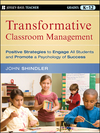
Transformative Classroom Management: Positive Strategies to Engage All Students and Promote a Psychology of Success
John Shindler
ISBN: 978-0-470-44843-4
Paperback
384 pages
December 2009
US $29.95


Click on the photo of the book to take you to a page where you may peek inside it.

The authors offer free articles here and as I begin to write about the book, I want to spotlight a concept (#9) from the book/author web site:

Promotes a “psychology of success” rather than a “psychology of failure.” Most classroom practices actually promote a failure orientation in students. TCM outlines those practices that promote a healthy learner and those that undermine this effort.

That's what *I* want for my children. I want all of us to have that at home. I want my children to experience that at school. I want the teachers of my children (myself included - I am a homeschooler to one, after all) to understand "Transformative Classroom Management".

Transformative Classroom Management isn't a book that teaches us how to "get" something from our children, our students. It's a book about how to use ourselves differently to bring success to the classroom and to our students. Dr Shindler teaches us about motivation, intrinsic and extrinsic, which is more effective and the "how to" behind the effectiveness.

Some individuals understand how to promote a "psychology of success" quite naturally. My daughter's skating coach is one of them. I have learned so much from watching her work with my child. She's an incredible teacher for me.

At home, I recognize some patterns of interaction that are negative, some circles that I'd like to set spinning into a different, more postive motion, and Dr. Shindler gives me fuel for thought and action as a parent.

I know I have room for improvement (a gross understatement), and as I read the pages from this book, I grow in self-awareness as a parent and am able to identify some places at home that need changes, and I am given some tools that help me begin to shift how I use myself in situations. (Doesn't hurt that it fits with our RDI(r) philosphy.)

The table of contents of "Transformative Classroom Management" is exciting to me. Please take a peek.

This one's a book that appears to be written for school-building staff members, and my opinion is that it has a much broader audience. Anyone who interacts with students in any setting, home, Sunday School, day care, homeschool, homeschool co-op, you name it, will benefit from the information, the research, the illustrative anecdotes, case studies and questions for reflection that Dr. John Schindler provides.

A sample chapter is available HERE.

This book, for the most part, is written with typically developing children in mind. My experience using a developmental remediation approach to autism tells me that many of the strategies described in this book will work with *any* student if applied in a developmentally appropriate frameworok. Chapter 14, "Changing the Negative Identity Pattern and Succeeding with More Challenging Student Behavior" addresses ADHD, particularly, page 291-293, section 14.16, "Level III Conditions and Supporting Students with ADHD".

I recognize some of the stories inside. I recognize them because I hear from parents of children who are considered "problems" at school, where the parents believe the classroom management is the problem. Transformative Classroom Management is another one that parents who wrestle with school staff are likely to want to buy in bulk so that they can gift copies to teachers.


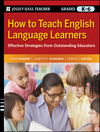
How to Teach English Language Learners: Effective Strategies from Outstanding Educators, Grades K-6
Diane Haager, Janette K. Klingner, Terese C. Aceves
ISBN: 978-0-470-39005-4
Paperback
208 pages
December 2009
US $29.95


Click on the photo of the book to take you to a page where you may peek inside it.

This title interests me because I have often said that I suspected my child w/ an autism spectrum disorder diagnosis was learning English almost as a second language. Her babbling and jargon was different from other children, as if she were hearing different spoken sounds. As I watch her and other children like her struggle with language development, I often wonder if there are strategies we can borrow from professionals who teach ELL whose first language is not English.

I sometimes (okay, often) read (sometimes skim) a non-fiction book from the back to the front first. The last chapter, "Conclusion: Putting It All Together" happens to be an incredible wealth of information for not only teachers of ELL but all teachers, even parents in homeschool settings.
This book uses "vivid portraits of effective teachers at each tier of the Response to Intervention model." (p 161) The authors do a nice job using anecdotes to illustrate the concepts, with "Stop and Think" bubbles along the way to spotlight for readers/teachers the "why bother" and "how might you apply this concept?". The authors know the obstacles to teaching ELL in a big classroom and offer strategies about how to give the needed attention and individualization to the students who need it. I like the emphasis on the importance of including the parents of the students in learning.

The table of contents is HERE and a sample from a chapter is HERE.

How To Teach English Language Learners is aimed at exactly what the title describes, and yet, it contains information that is supportive and encouraging to any teacher.


Teacher Collaboration for Professional Learning: Facilitating Study, Research, and Inquiry Communities
Cynthia A. Lassonde, Susan E. Israel, Janice F. Almasi (Foreword by)
ISBN: 978-0-470-46131-0
Paperback
208 pages
December 2009
US $30.00

Click on the photo of the book to take you to a page where you may peek inside it.


One of the schools my daughter attended prior to becoming homeschooled practiced a staff collaboration. That school was the best of all the schools she attended prior to my withdrawing her. The principal was an advocate of collaboration and found a successful model to use at her school. And it worked.

I suspect that teachers like the many positive outcomes of collaboration. They grow peer relationships, they develop professionally, they become better teachers, and their students benefit.

I also suspect that there are enough negatives to the practice of collaboration that discourage schools from using it. How does a group organize and begin? How does a group focus? How does the group maximize time? Teachers have lives outside the classroom, and wasting time on the planning, scheduling, group bonding/dynamics, personalities, obstacles and roadblocks can make a group ineffective or stop it before it begins.

Potential collaborative groups need a model. A guide. Words of wisdom from folks who've walked this road ahead of them. Two authors, 31 contributors - "Teacher Collaboration for Professional Learning" is packed with experience from educators.

"Teacher Collaboration for Professional Learning" is a book that has a more limited audience, one that teachers and school-building staff will appreciate, and it's a book that describes the team-approach that so many parents wish their school staff members would implement at their schools in an effort to make improvements in the classroom.

Cynthia A. Lassonde and Susan E. Israel provide the "why bother" and "how to" of collaborative research for teachers and school staff members. The authors and contributors provide an amazing amount of guidance to help school staff begin and complete collaborative research, including the sometimes tricky element of group dynamics and helping a group troubleshoot potential obstacles from the get-go. The appendices are a wealth of practical information: The authors provide all of the forms a group might need in Appendix A; questions for reflection in Appendix B; group exercises, resources and a survey in other appendices.

The table of contents is HERE. A sample chapter is HERE for readers who would like to look inside.


Stay tuned - I have a new book about dyslexia from Jossey Bass Teacher. Information coming shortly.


Jossey-Bass, an Imprint of Wiley, sent me these three books (at no charge) to review on my blog. I received no compensation.
OnePlusYou Quizzes and Widgets

Created by OnePlusYou -

Stat Counter