Showing posts with label Wiley Review. Show all posts

Tuesday, May 3, 2011

sam the cooking guy: just grill this!" by sam zien

In my constant search for recipes that my whole family can enjoy together (one of my children is on a gluten free, dairy free, soy free and more diet), I am looking more and more at cookbooks that concentrate on meat.

sam the cooking guy: just grill this! arrived while we were in transition in a hotel and hubby and I spent lots of time poolside drooling over browsing the recipes and fabulous food photos while the kids were swimming.

I have not had an opportunity to grill a single thing since our move. We do not have a grill our our new location. At our 'old' house, our grill was a permanent fixture attached to our little deck, using a gas line from the house. We never had to fill a propane tank. Our 'new' house has an even smaller deck and came with no bbq grill. So, we are shopping for them, and I am researching the newfangled infrared grills. They fascinate me. Zien suggests I get a ridged grill pan and grill indoors.

Right from the start, I learned some tips. I have always thrown my meat on the grill straight from the refrigerator. Zien says to allow it to sit at room temp about half an hour before I cook it. ("You can't possibly cook meat properly if it's fridge-cold in the middle." p. 24)

Please peek inside: The table of contents is here. The chapter called small things is here. For those of us who like to read from back to front, the index is here.

When I think of grilling, I think of meats, yet Zien gives us recipes for veggies, salads, sides, drinks and desserts, too (not all are grilled).

For those of us cooking for individuals with food allergies and intolerances, Zien gives us a long list of recipes we can use. Most are naturally allergen free. No, all of the recipes are not allergen free, and you'll have to find the dishes that are right for you, and I suspect you'll find quite a few recipes to work with. (I need a soy substitute for some recipes that use soy sauce.)

What do I want to make as soon as I get a grill? cedar plank salmon. sticky sweet ribs. lamb with rosemary oil. mustard, honey, & curry chicken things. Zien gives us a cheese-free recipe for amazing leftover steak tacos (it does contain a little sour cream). the best cauliflower. grilled bacon & mashed potato pizza. That's my short list.

My favorite quote from the cookbook: "When I autograph a book to a couple, I like to write, 'Cook together--always.' I think being together in a kitchen...the fun, the hassle, the casualness of the whole thing--whatever it is--is good for two people." ... (p 218)

The 272-page paperback is priced at $19.95 and is available now.


Wiley provided a review copy of just grill this. I received no payment for this review and am not obligated to provide a positive review. And when I get a bbq grill and cook from this cookbook, I'll blog about it.

Monday, January 10, 2011

Falling Off The Bone

Author Jean Anderson, via Wiley, brings us a beautiful cookbook for all things meat: Falling Off The Bone.

I'm the one who finds a new recipe to try only to have it flop because the meat is tough and the kids won't eat it. Falling Off The Bone ($29.99) promises to teach me how to turn out tender, delicious meats every time.

The pictures in this sturdy hardback cookbook are gorgeous. I can't decide what to try first. I page through the book looking at recipe titles, ingredients, and photos, and think, "I want to try that one and that one and that one and that one..." There are a few recipes from the cookbook here.

Falling Off The Bone covers (in chapters) beef, veal, lamb, and pork. I find one recipe (puchero, page 70) in the beef section that uses poultry (chicken drumsticks are an ingredient).

Author Stevenson gives us recipes for soups, stews, one-dish meals, and entrees. Recipes range from traditional U.S. comfort foods to dishes from different cultures from around the world. Anderson shares favorite family recipes with readers, too.

The most important parts of the book for me are the "how-to" and "why bother". Anderson gives the reader instruction and education about different pieces of meat, about how to tenderize, about kitchen tools, gadgets and pots & pans, about ingredients to enhance flavors, about short cuts, about anything you need to know when cooking beef, veal, lamb, and pork.

Allergen-free cooks: This is not an allergen free or even gluten free cookbook. If you're comfortable making substitutions, you'll be able to use this cookbook with ease.

With the wake-up temp at 8 degrees above zero this morning, a soup or stew would be good; another choice would be a recipe to use the chuck roast that I have in the freezer. Decisions, decisions. Armstrong has recipes for them all.

Wiley sent me a copy of Falling Off The Bone for review purposes. I am not paid for reviews and am not obligated to provide a positive review.

Thursday, October 28, 2010

Cookbook: Fresh From The Market

In my never-ending quest to find recipes that are GFCFSF (and a few other "frees") to fit family food sensitivities that all of the majority of our family will eat, combined with an interest in seasonal eating/cooking because it is healthier and may help lessen food sensitivities, I requested one of Wiley's very newest cookbooks to review: Fresh From The Market, Seasonal Cooking With Laurent Tourondel and Charlotte March.

Often, "market" cookbooks focus on whole foods which happen to offer a good number of GFCFSF recipes.

When I opened the package containing Fresh From The Market, Seasonal Cooking With Laurent Tourondel and Charlotte March, ($35.00, hardback) the book automatically flipped open to a recipe for Spicy Crispy Chicken from the Spring section, a gluten-free roasted chicken with eight spices in the recipe list. I wonder if I dare make this one in autumn?

The cookbook is beautiful. Heavy; weighty. The pictures are gorgeous. As Thanksgiving approaches, I peeked at the Roasted Turkey with Chestnut-Sausage Stuffing, Cranberry-Grenadine Relish, and Rosemary Gravy recipe. Makes your mouth water, doesn't it? And with a gluten-free bread in the stuffing, only the gravy needs substitutions for the cream and flour in order for the entire thing to be GFCFSF.

The authors give us a little bit of everything, from drink recipes, to breakfast recipes, salads that I'd consider for lunch, dinner recipes, and holiday recipes. They provide lists of seasonal foods by month and sample holiday menus. The table-of-contents is HERE. Amazon dot com shares a recipe HERE.

It is an education for me; I'm learning new vocabulary. For example, I learned that the ramps used in the cookbook are wild leeks, and I'm pretty sure I've not seen them at our farmer's market. Mache is a kind of lettuce. Burrata and Fiscaliini are cheeses. Pavlova is a meringue-based dessert. There is so much to learn. I did expect it to use more 'ordinary' ingredients from the market and not so many 'unusual' ones.

Laurent Tourondel and Charlotte March use quite a few ingredients that I have not seen at local markets and would likely be challenged to find, including quail eggs, milk-fed veal sweetbreads, rabbit, skate, duck eggs, or wild boar.

My complaint is that the text is much too small for my past-the-midpoint between 40-&-50 year-old eyes, even with reading glasses.

If you're looking for gluten free, or dairy free, or allergen free recipes, there are some sprinkled throughout the book, although the authors use quite a bit of cheese, milk, eggs, nuts. If you're experienced at making your own substitutions for food sensitivities, you'll find more that you can use than people who aren't confident making substitutions in "regular" recipes.

Many of the recipes are what I consider too fancy for everyday, although maybe I need to rethink my perspetive on that one. (We are worth some fancy foods! Pigs in a Blanket "Ritz Carlton" might be a fun place to begin, although the store-bought frozen puff-pastry in the recipe isn't gluten free) Most of the recipes that I will use will be altered in some way (partly because of our food sensitivities and partly because the ingredients are challenging to find); for example, the butternut squash soup sounds delicious, however, I am sure that I will not make the Foie Gras and Wild Mushroom Crostini to accompany it.

Fresh From The Market, Seasonal Cooking With Laurent Tourondel and Charlotte March is a lovely cookbook as I learn more about seasonal buying, cooking, and eating. I'm thrilled to add it to my collection.

Wiley sent me Fresh From The Market, Seasonal Cooking With Laurent Tourondel and Charlotte March in exchange for my review. I am not paid for reviews and am not obligated to provide a positive review.

Friday, October 22, 2010

easy gluten-free"

The American Dietetic Association has a brand new cookbook, "easy gluten-free". Authors Tricia Thompson, M.S., R.D., and Marlisa Brown, M.S., R.D., C.D.E., C.D.N., have written more than a cookbook. This 271 page paperback begins with a forward by Gluten Free Girl Shauna James Ahern and includes many gluten free recipes in the middle section between a 37 page introduction to all things gluten free and a generous reference section at the back of the book.

easy gluten-free ($15.95) gives us a good cross-section of recipes for every meal, that include entrees, side dishes, snacks, dessert. There are fancy dishes, there are comfort foods, there are recipes that look long and complicated, and some that are short and simple. It's a good mix.

The table of contents is HERE.

Chapter 1, "I Have to Eat Gluten-Free. Now What?" is HERE.

No, some of the recipes aren't casein (milk) free, nut free, egg free, allergen free, although some recipes contain substitutions suggestions. There are quite a few that are allergen free. My GFCFSFer daughter looked through the book last night, unusual for her, and called to me in the next room to tell me about different recipes. She wants to make Mexican Pizza and baked onion rings, among other things.

For individuals who must rotate grains, there are recipes that use some of the more "unusual" grains, like quinoa, teff, and amaranth.

The negatives for me: There are no photos inside. The paperback is floppy and you'll need something to weight it down or hold open the pages as you cook from it. And here's a big pet peeve of mine: The URLs mentioned in chapter one are too difficult to find. No one wants to type two lines of characters to find an internet reference. I wound up going to the blog site and searching on key words rather than trying to type that too-long list of characters. Here's one example (which I went to the trouble to find and cut and paste for you - what a pain to type!): http://www.diet.com/dietblogs/read_blog.php?title=Labeling+of+USDA-Regulated+Foods&blid=17330 I looked for a shorter perma-link and could not locate one. Establishing a new blog via blogger to hold those posts for simple perma-links would have been easy to do.

I like this book. It's a good starter book for a newbie; it's a good book for anyone who might be entertaining and cooking for frends with gluten intolerance.


Wiley sent me this book so that I could review it on my blog. I am not paid for this review and am not obligated to provide a positive review.

Wednesday, October 20, 2010

Betty Crocker fix with a mix desserts

Allow me to introduce Betty Crocker's fix with a mix desserts, 100 sensational sweets made easy wih a mix, a cookbook that includes a chapter on using Betty Crocker's new line of GLUTEN FREE mixes.

I have always liked recipes that began with a mix, where you add ingredients and get something special. (I have a coconut cake recipe that people believe is from scratch, and it begins with a mix. That's one that I haven't succeeded in making gluten free -- yet -- although I have tried.)

I was disappointed to see that there are only SEVEN gluten free recipes in the bonus section of the cookbook; HOWEVER, as I scan the gluten-filled recipes, I see many opportunities to substitute a gluten-free mix. If you are a veteran at gluten-free baking, I suspect you'll see the opportunities, too.

My guess is that the gluten-free recipes are especially for someone who is new to GF baking, or for, perhaps someone completely unfamiliar with it, who is baking a sweet for a GF friend.

If you are baking casein (milk) free, nut free, egg free, or other allergen-free, you'll have to know how to make substitutions, because this particular cookbook does not offer those substitutions.

The photos in the cookbook are beautiful; the presentations of finished recipes are pretty, yet simple enough that I believe I can duplicate them at home. As I look at the cookbook for ideas I can use in GFCFSF baking, I see some neat desserts in the gluten-filled section that I can copy with substitutions for my GFCFSF girl. I love new ideas! I can't believe I'm going to type this, but here goes: the entire cookbook has helped me think outside the box. I'm so afraid to experiment with gluten-free mixes, afraid the experiment will be a gummy flop, that sometimes I don't try. Comparing the gluten-free recipes with the gluten-filled recipes is interesting - there are so many similarities - my confidence is growing and I'll be trying some substitutions.

Some recipes call for canned frosting, so if you're like me, avoiding soy and milk, you'll have to make a homemade frosting, which adds to the prep time, although icing is not difficult to make (and I prefer homemade over canned).

Priced at $19.95, the pages in this cookbook are spiral bound within a sturdy hardcover. It lies flat on my counter and the cookbook stays open to the recipe I'm using without my having to weight it down.

I am craving the pumpkin spice cupcakes right now. I think I have all of the ingredients for them, too.

Wiley sent me Betty Crocker fix with a mix desserts so that I could review it for my blog. I am not paid for reviews and am not obligated to provide a positive review.

Tuesday, September 28, 2010

A Must Read: Education Nation

Most of the time, I know what review items are coming to my mailbox. Occasionally, though, Wiley, and its Imprint, Jossey-Bass, will send me a surprise. Education Nation is one of the surprises.

With education reform in the news this week, Education Nation, is certainly topical in light of current events.

A couple of things grabbed me from the get-go. First, George Lucas wrote the forward of the book. American Graffiti,-Star Wars-Indiana Jones-George Lucas? Yes, that George Lucas. The next thing that caught my attention is Milton Chen's background. "Big Bird Goes To China" - does that ring any bells for you? I must have watched that movie a hundred times with my kids. Chen was a production assistant in that movie. I had to wonder, how did George Lucas and staff from Sesame Street come together and what does this book have to do with it?

Wiley and its Imprint, Jossey-Bass, continue to publish books about education that come from a perspective that differs from the "gotta teach to the test" mentality. Again and again, they send me books that describe and richly illustrate the value, the why-bother, the how-to teach our children in ways that allow the students to be engaged, active participants. This is another of those books - and while other books I've been given had more specific audiences, Education Nation, in my opinion, is a must read for everyone.

Author Milton Chen gives us a big picture view and a zoomed in look at what creates learning. He takes the reader through what works and he provides many anecdotes that illustrate little pockets of success across the nation. As a homeschooler of a child on the autism spectrum, I know that homeschoolers are already using many of the strategies and approaches that Chen suggests, because we chose to homeschool in order to approach learning differently from the public school setting. Chen gives me ideas to use at home with my girl, ideas that are proven to work, ideas that I had not thought of. (Note to self: get the girl an iPod w/ a microphone.)

Some key words and phrases that get me excited: project based learning. social/emotional learning, active participation.

Chen describes guided participation in an education setting and does an incredible job explaining why it's important, how to implement, that it works. He explains new ways to meaningfully asses students once we move way from a "teachers deliver content" and "teach to the test" approach, and toward a "teacher as facilitator of student discoveries" perspective.

Technology and media play a huge role in our society, and Chen thoughtfully describes the benefits of getting more technology and media into the hands of students, sooner, integrating technology and media into learning.

My opinion is that every parent, every teacher, every taxpayer should read this book. Whether you're a homeschooler, a public schooler, a private schooler, you need to read this book. Chen argues that the United States has fallen behind other countries in terms of educating our children, and the current state of education has school staff teaching to the test, which does not translate into the kind of learning and education that keeps the U.S. up to speed with other nations.

Even homeschoolers and taxpayers who aren't parents have a stake in how students in our public schools are taught. These students will be our future leaders. We need to make our voices known to our state and especially our federal lawmakers as federal education policy is being shaped. National standards, teaching to the test of standards, may not be the way to educational success for the United States.

I think that many homeschoolers will read this and think, "WE are already doing a lot of that! That's one of the reasons we chose to homeschool."

You can read the first chapter online, here. The table of contents is here.

The book will likely lead you to the internet to http://www.edutopia.org/. There are almost endless resources there for teachers. Yes, intended for school-building school teachers, but useful for homeschoolers and homeschool co-ops as well. Edutopia has a page about Education Nation, too: http://www.edutopia.org/educationnation.

There are freebies available to anyone. For example, Chen describes using movies in the learning process. He takes us to http://www.edutopia.org/story-movies, which takes us to The Film Foundation and study guides like this one, available (free) to any teacher.


Jossey-Bass sent me a media copy of "Education Nation" at no charge. I am not financially compensated for reviews and am not obligated to provide a positive review.

Wednesday, September 15, 2010

gluten-free girl and the chef

I often say that being SIMPLY gluten free would be so easy. My child and I have a long list of food sensitivities that can make meal planning and cooking feel like a chore.

As I read gluten-free girl and the chef, a love story with 100 tempting recipes, I realize that being SIMPLY gluten-free would be fun, too. The Aherns remind me that food is supposed to be fun, something to enjoy, not a chore to dread. Shauna and Daniel Ahern are an inspiration.

gluten-free girl and the chef, a love story with 100 tempting recipes is, as the title reveals, part cookbook, part love story, and Shauna Ahern tells us that it is meant to be read cover-to-cover, from beginning to end. It's more than a cookbook and a love story; it's an education, too, with real how-to tips and instructions about cooking basics.

I read it cover to cover yesterday and today. What a fun book!

I first "met" Shauna at the library, when her book, gluten-free girl: How I Found the Food That Loves Me Back...And How You Can Too caught my eye. I brought it home and read it cover to cover. Shauna James Ahern weaves a wonderful story. I found Shauna's blog. I anticipated the new cookbook would be wonderful. (I think it is!)

Back to gluten-free girl and the chef: Their story, their love story, is hard to put down. Shauna and Daniel's closeness is something I envy. I enjoy the glimpse inside a restaurant kitchen, the peek into how a chef thinks. The images they describe, and some of the language, is quite colorful. (They occasionally use words and phrases that I don't use; particularly in descriptions of conversations in restaurant kitchens. There was a comment about the colorful language on an Amazon review; while I don't use language like that, it wouldn't stop me from buying a cookbook.) Their descriptions make me want to visit the Pacific Northwest again. I visited Seattle a couple of times (years ago); I've been inside some of the very places described vividly in the book; the authors' detail helps me picture them in my mind.

(I think Food Network should create a reality-tv show that chronicles the days of this family. I'd tune in.)

The Aherns, apparently, think about food the way I think about autism, all the time, or a majority of the time. And they cook and write about it, deliciously. (I can't believe they don't each weigh 400 pounds. They must have some big self-control when it comes to portion sizes.)

They inspire me, revitalize my desire to try to find new recipes, new foods, that fit our food sensitivities, that we can enjoy together. They remind me what food and cooking are all about. They remind me to eat as locally as possible and cook seasonally, which is healthier and supports local farmers. I have the urge to get to the farmers market more often.

This cookbook is beautiful. The photos make my mouth water. I'm all over the place. One minute, I am intimidated by some of the recipes. Next, I want to make several of them right now. Flatbread crackers (and that pizza on the cover). Asian pear tart. Waffles. Crusty Bread That Even Those Who Eat Gluten Might Like. Halibut with Millet, Carrot-Fennel Salad, and Golden Raisin Sauce. And, the Bacon-Wrapped Pork Belly (probably the most unhealthy thing in the world, but oooooooooh, it sounds so good!). And I want to have a bacon party. The Aherns have a long list of recipes on the blog if you'd like to peek at some of the recipes they make at home. This video and this one demonstrate a couple of the recipes in the book. (Chef makes everything look easy.)

To my readers who, like me, are more than simply gluten free: gluten-free girl and the chef is a gluten-free cookbook. Not allergen free. I use gluten free cookbooks as a starting point and improvise from there, based on our sensitivities. They sometimes use foods I can't use (cheese, milk, cream, milk powder, eggs, almond flour, nuts, shellfish, and no, we cannot simply substitute goat's milk for the cow's milk), some I rotate in our weeks. Some of the ingredients that are off limits at my house, I can omit or substitute; some I cannot. Still, there are quite a few recipes I can try, as is. And they give me a baking tip that is new to me: When I substitute a gf flour for a gf flour in a recipe, I need to match the weight in ounces, not the amount by cup or fraction of a cup. What an a-ha moment for me. They include weights in the ingredient lists of recipes in this cookbook.

There's a good mix of recipes in the cookbook. It's not just a baking cookbook or just entrees or just desserts. gluten-free girl and the chef includes a little bit of everything. Some of the recipes I think are too fancy for everyday (I suspect the authors would disagree with me). Maybe that's because I feel intimidated by the techniques and length of the ingredient lists on the ones that I consider "fancy". Whether you're cooking for a dinner party, for a pot luck, or for the family at home, the Aherns have something for you.

They have me wishing for some cooking classes and a new (gourmet) kitchen. One reason I'm reluctant to broaden my horizons in the kitchen is because prep and clean-up seem to take forever, and I have a small counter space on which to work. I am not experienced at searing and braising. If I were more practiced at chopping and didn't have to stop to read how-to directions when using a new technique, if I could just go into the kitchen and cook and not think about it, I'd do it more. There's only one fix for that: get in the kitchen and practice more.

One of the first things I did when I received my review copy was look for the pizza recipe inside. Pizza is pictured on the book jacket, but I couldn't locate the recipe inside. I headed over to Gluten-free Girl's facebook page to ask about it, and found I was not the first to ask that question. I'm told that FRIDAY, the gluten-free girl and the chef will do a blog post and video about making the pizza from the flatbread cracker recipe in the cookbook.

(I'm confused by information about making waffles.
According to the side bar on page 86, variations:"Play with other whole grain flours for this mix...""...but keep the potato starch and the sweet rice flour so the mix will be light."... I don't see potato starch or sweet rice flour in the original recipe list of ingredients. Is there supposed to be potato starch and sweet rice flour in the original recipe? I'm not sure. Waffle recipe is HERE.)

For those of you who are like me and often start at the back of the book, the index is available online, along with the TOC. The table of contents is here and the index is here. And a video featuring the authors is here.

Thank you, Shauna and Daniel Ahern, for reviving my desire to bring the family together with food as the glue, for encouraging me to keep trying new things, looking for new recipes that fit our situation! The cookbook is a jewel and I treasure it.
Wiley sent me a complimentary copy of this cookbook so that I could review it on my blog. I am not financially compensated for reviews and am not obligated to provide a positive review.

Wednesday, September 1, 2010

Allergy Free Desserts by Elizabeth Gordon

I follow quite a few food bloggers who blog gluten free or allergen free. Elizabeth Gordon is one of them. She doesn't blog frequently, but when she does, she sometimes shares a sweet recipe. Allergy Free Delights is in my left side bar, and when Gordon posts, I see it because the most recently updated blogs move to the top of the blogroll.

The recipes that Gordon posts make my mouth water. I'm not kidding. Peek at a couple of them. Chipwiches. ohmy And fig newtons. They have the look of yum. English toffee. I dream of toffee.

My desire to do some serious GFCFSF+++ baking has been greater than my ability to pull it off this summer. I need to organize my kitchen (again). (I heart author Gordon for having some of the same challenges that I do, yet she seems to experment in the kitchen more than I.) I loathe turning on the oven in the summertime. We've had so many hot, humid days near or above 90 that I don't want to heat the oven while the a/c is pumping on overdrive.

I've spent a lot of time reading cookbooks and dreaming about what I would actually make.

I received Elizabeth Gordon's new cookbook, allergy free desserts a week or so ago. List price is $22.95, the cookbook is a beautiful hardback, complete with photos of the recipes (I like photos!). True to the title of the book, the recipes are all glorious sweets. Yes, mouth watering sweets. Yes, it's exactly the gluten-free baked goods that I want to make.

What I didn't expect was Gordon's heavy use of chick pea flour. Almost every recipe in the cookbook uses chick pea (garbanzo bean) flour. (IF YOU ARE BAKING FOR SOMEONE WHO IS SENSITIVE TO RICE, check out this cookbook.)

Chick peas are related to soy and peanuts, and while some individuals who are sensitive to soy and peanuts are NOT sensitive to chick peas, I have chosen to avoid chick pea flour in my GFCFSF+++ baking. My daughter had reactions to peanuts when she was small and we got rid of peanuts. Lab tests reveal a sensitivity to soy. (My BIL and nephews have peanut and legume allergies.)

So, when I use her cookbook and recipes, I will make some rather big changes to them when I use a rice flour blend with corn starch to avoid the particular sensitivities we have at my house (potato happens to be one of my sensitivities).

I've had success changing other GFCF recipes to suit our needs - once the proportions are determined, flour blends can be somewhat interchangable, and I hope this holds true for bean flour blends. I haven't used many recipes intended for bean flours. So, we'll see. I'm up for an experiment. I've got my eye on a chocolate cake that uses cola as one of the ingredients because a) I love chocolate and the picture has me almost drooling over it and b) it reminds me of a cake I used to make before I stopped buying wheat flour.

Wiley sent me a complimentary copy of allergy-free desserts to review. I am not paid to write this review and am not obligated to provide a positive review.

Wednesday, August 18, 2010

Carol Fenster: 100 Best Gluten Free Recipes

Carol Fenster is a name I became familiar with 9½ years ago when my daughter went on a gluten free diet (three weeks later, we removed casein from her diet, also). I own a couple of Carol Fenster gluten free cookbooks, both are paperback with no photos. (And yes, I purchased them.) And Fenster's recipes were gluten free - not casein (dairy) free. I don't cook from them often because I have to figure out how to alter recipes to fit all of our other dietary requirements. (Fenster is NOT an allergen free baker/cook.)

I trust Fenster. She's well known in gluten free circles everywhere; she's a popular speaker, and her flour blends are often recommended and shared. As I become more comfortable making substitutions for our specific allergens, I am more comfortable trying recipes from folks who, like Fenster, aren't completely allergen free.

100 Best Gluten Free Recipes is different from the other cookbooks by Fenster that I own in that it is hardback and it contains color photographs, and offers recipes that are vegetarian (meat/dairy free) and offers substitutions for some milk-based ingredients in some of her recipes.

Fenster gives us a little bit of everything in this cookbook. Here is theTable of Contents:

Introduction
Breakfast, Breads and Muffins
Small Bites: Appetizers, Soups, Salads and Sandwiches
Grains, Beans, and Pasta
Main Dishes
Desserts
Sources
Index

There are photographs of some of the completed recipes. The pictures are wonderful. (I like a cookbook with photos of completed recipes.) I have a short list that grows longer by the minute of recipes I want to try. If I can find a soy free, milk free cream cheese substitute, I want to try the Individual Fruit Tarts in Coconut Crusts pictured on the back cover. I'll try the crusts without the filling. The corn dogs pictured inside are the neatest, most "normal" looking corn dogs I've seen in any gluten free cookbook. (Will I be able to make mine look like those? Hmmm.) I want to make my own ice cream waffle cones. (Yum!) Lemon chicken. Chocolate chip muffins (they're actually chocolate muffins w/ chocolate chips, and yes, there's a photo).

For the most part, Fenster cooks with "regular" ingredients. If you're a gluten free cook, you'll recognize all of the different flour substitutes, the gums needed for baking, etc. Chia seeds are used in one recipe and are one of the few unusual items in the cookbook (I haven't seen them in a store yet).

If you are looking for a strict GFCF cookbook, this isn't it; although there are plenty of GFCF recipes to try here. If you're allergen free, you'll have to make quite a few substitutions. (I've said this before and I'll say it again, being simply gluten free would be so easy!)

This book is small, physically, too, giving it advantages and disadvantages in my opinion. A smaller book travels more easily, fitting into my tote bag on a trip or to the waiting room of an autism therapy appointment. On the other hand, a smaller book is more challenging to cook from (thank goodness for my StudyPod to prop it upright and open in the kitchen). A smaller book means the font is smaller, although I need my reading glasses for pretty much any book I cook from now.

Priced at $16.95, yes, I'd buy this book to add to my collection.

Wiley sent me a complimentary review copy of Carol Fenster's 100 Best Gluten Free Recipes to review here. I am not otherwise compensated for reviews and am not obligated to provide a positive review.

Evocative Coaching

"When we 'provoke' someone, we do something to them in ways that provoke a reaction. To 'evoke' means that we do something with someone that unleashes or calls forth their full potential."

I have spent the last five or six years learning about how human beings learn, grow, and develop within a social context, within relationships, between-you-and-me. Most of my time has been spent on the parent/child relationship. Our family uses an intervention called Relationship Development Intervention(r), which uses a term borrowed from Barbara Rogoff, called "guided participation". We are applying a typical course of development, via the parent/child relationship, to the developmental delays and what RDI(r) calls the "core deficits" of autism.

We've learned to use ourselves in ways that allow our daughter to grow, to change, to make her own discoveries about relationships, about people, about herself.

Evocative Coaching is a really interesting, insightful read for me. It is, in my opinion, "guided participation" applied to the relationship where one teacher coaches another in a way that the teacher being coached makes discoveries about his/her self, his/her strengths, his/her fears, weaknesses, likes, dislikes, toward making that teacher a better teacher. I see so many similarities between what we work toward with my daughter (w/ autism) and what is taught and described in Evocative Coaching.

"Timothy Gallway's (2008) book The Inner Game of Tennis, first published in 1974, was a call to limit the use of instructions and incentives in coaching because of their oftentimes debilitating impact on the internal dynamics that make for optimum skill development and performance improvement. Ironically, he noted, the more important the stakes of the external requirements and reinforcements, the more instruction distracts people from their own 'natural learning' styles (p.22)."

External requirements and reinforcements distract from natural learning? Who knew? (sarcasm)

p 11: "Such coaching does not try to change teachers and does not try to persuade them to do things the 'right' way; rather, evocative coaching dances with teachers as they consider their options and invites them to become fully engaged in the process of discovering their own unique strategies for doing better." In RDI(r) we're not out to change our kids - we dance with them in a way that allows our kids to make their own discoveries. Here's another book that helps me look at the same concepts through two new sets of eyes.

Wiley's press materials use the word "dance" too: "By taking a teacher-centered, no-fault, strengths-based approach to performance improvement, the Evocative Coaching model generates the motivation and movement that enables teachers and schools to achieve desired outcomes and enhance quality of life. Viewed as a dynamic dance, the model is choreographed in four steps Story, Empathy, Inquiry, Design which are each laid out in its own chapter with powerful illustrative materials and end-of-chapter discussion questions to prompt further reflection."

How do I use myself to teach my children about others and themselves without telling them what to do (which leaves them passive) in a way that allows them to change by being active participants each day? How would I mentor another mom? This book shows us how.

Yes, this book is for adults, teacher-to-teacher, but I am gleaning a lot from it from the perspective of an autism interventionist. I think parents of typically developing teens might find it useful. Any mentor, I suspect, will learn from this book. Chapter one is HERE in its entirety. I think you'll be inspired.

Resources in the form of forms (that's clear, isn't it?) are HERE.

Wiley sent me a free review copy of "Evocative Coaching". I receive no financial compensation for reviews and am not obligated to provide a positive review.

Friday, June 11, 2010

Vanessa Maltin's, "the gloriously gluten-free cookbook"


I received a copy of Vanessa Maltin's new cookbook last night. It's titled, the gloriously gluten-free cookbook, Spicing Up Life with Italian, Asian, and Mexican Recipes.

I sat down after supper and read the forward by Heidi Collins, read Maltin's intro, and read every recipe with my "we're-more-than-gluten-free-and-can-I-actually-use-this-cookbook???" perspective.

Oh, yes I can!!!

For those of you who are simply GLUTEN-FREE, I think you'll adore this cookbook. For those of you who are MORE than gluten free, I think you'll find (like I did) recipes you can use AS IS and some you can use with a substitution here or there. There are a number of recipes that have enough casein-based ingredients that I will not be able to make them at all for my daughter, (I don't have a good GFCFSF substitute for Parmesan cheese, for example) but will be able to make them for myself and friends with a wheat intolerance or Celiac.

I cook around so many allergies that I don't expect a cookbook to cover all of them. Gluten-free recipes are easier to adapt, because the gluten-free part of the recipe has already been adapted for me, allowing me to concentrate on substitutions for other ingredients on our lists at home. This cookbook is a good starting point for me.

I'm not a fan of Mexican food. I didn't grow up tasting those spices and I've never grown a taste for them. As an adult, I learned that I like Italian and Asian food, and gave up making those recipes when my daughter was diagnosed with a number of food allergies that include wheat/gluten, milk/casein, and soy.

I am delighted to see several recipes in the Asian section that do not use soy sauce!!! There are a few Asian recipes that use just a small amount of soy sauce - I may be able to recreate them with a mock soy sauce now that I have a solid "base" recipe.

My daughter (the one w/ the allergies) peeped over my shoulder a couple of times as I was reading recipes and said she would try this one or that one if I'd make it. Now that I've discovered a soy-free, nut-free mozzarella cheese substitute, I want to try some of the Italian recipes in the gloriously gluten-free cookbook. Who knows, maybe I'll even try a Mexican recipe, too.

The entire chapter, "Italian GLUTEN-FREE Cooking", is HERE.

The cover photo is the only photo of a completed recipe in the book. (I like photos in cookbooks, and I'm guessing omitting photos allowed the publishers to include more great recipes while keeping the price down.)

The Gloriously Gluten-Free Cookbook: Spicing Up Life with Italian, Asian, and Mexican Recipes
ISBN: 978-0-470-44088-9
Paperback
256 pages
April 2010
US $19.95

Disclosure: Wiley Publishing sent me a review copy of the gloriously gluten-free cookbook. I am not financially compensated for reviews and am not obligated to provide a positive review.

Wednesday, February 3, 2010

The Dyslexia Checklist - a Jossey-Bass Teacher Review

Click on the photo of the book to take you to a page where you may peek inside it. There are three excerpts and the table of contents available for you, there.


The Dyslexia Checklist: A Practical Reference for Parents and Teachers
Sandra F. Rief, M.A., Judith Stern
ISBN: 978-0-470-42981-5
Paperback
336 pages
January 2010

US $15.95

Other Available Formats: E-Book


I learned something about myself. I like "checklist" books like this one. "The Dyslexia Checklist" is the fourth title in the Jossey-Bass Checklist Series, the second that I have read/reviewed. The two that I've seen are absolutely packed with information and tips, and are really efficient for me as I research and learn more about how my daughter learns, about how to improve the way I teach her.

My child has not been diagnosed with dyslexia. As I scan Section 1.3, "Signs and Symptoms of Dyslexia", beginning on page 11 of this book, I recognize many items on these lists. And I know that this book is not only for parents and teachers of students who have a diagnosis of dyslexia.

(I notice that Section 1.8 "Research Based Intervention Programs for Struggling Readers" has a section of programs based on the Orton-Gillingham Method which has me thinking about the spelling program we reviewed that is based on the Orton-Gillingham Method.)

Chapter 2, "Strategies for Helping With Reading, Language and Writing", offers readers a develomental framework of sorts -- which assists parents and teachers in working with a student at a developmentally appropriate starting point.

Chapter 3, "Checklists for Parents" includes important advocacy information (which, in my mind, connects with several sections in Chapter 5 that have to do with RTI, special ed, and 504 plans), in addition to strategies to use at home. The authors discuss the sensitive issue of how to talk to your child about dyslexia, here, as well.

Chapter 4, "Checklists for Teachers," is for homeschool teachers aka parents as well as school-building teachers, and contains lists of information about accommodations, supports, tools, and compensations.

Chapter 5, "Other Important Checklists for Parents and Teachers" addresses high school, college, RTI, special ed and IEPs, 504 plans, and conculdes with lists of organizations and resources.

I've researched and studied autism-related learning strategies for nearly nine years. This book offers many strategies that I've read about or been taught to use, some that I've forgotten along the way as my daughter has seemed to not need a particular support or strategy. As I study the checklists, I realize that we may need to revisit some of the ideas, or try some of the suggestions that are new to me, and having lists of ideas in one place is really efficient for me.

Add this one to the list of books that you'll want to read with a highlighter or pen in one hand, and it's probably one you'll want to buy in bulk, so that you can share it with those who interact with your child.


Jossey-Bass, an Imprint of Wiley, sent me this book (at no charge) to review on my blog. I received no compensation for the review.

Monday, February 1, 2010

ELL; Teacher Collaboration; Classroom Management: Three New Titles from Jossey-Bass Teacher

Here are three new books from Jossey-Bass Teacher.


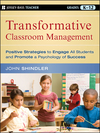
Transformative Classroom Management: Positive Strategies to Engage All Students and Promote a Psychology of Success
John Shindler
ISBN: 978-0-470-44843-4
Paperback
384 pages
December 2009
US $29.95


Click on the photo of the book to take you to a page where you may peek inside it.

The authors offer free articles here and as I begin to write about the book, I want to spotlight a concept (#9) from the book/author web site:

Promotes a “psychology of success” rather than a “psychology of failure.” Most classroom practices actually promote a failure orientation in students. TCM outlines those practices that promote a healthy learner and those that undermine this effort.

That's what *I* want for my children. I want all of us to have that at home. I want my children to experience that at school. I want the teachers of my children (myself included - I am a homeschooler to one, after all) to understand "Transformative Classroom Management".

Transformative Classroom Management isn't a book that teaches us how to "get" something from our children, our students. It's a book about how to use ourselves differently to bring success to the classroom and to our students. Dr Shindler teaches us about motivation, intrinsic and extrinsic, which is more effective and the "how to" behind the effectiveness.

Some individuals understand how to promote a "psychology of success" quite naturally. My daughter's skating coach is one of them. I have learned so much from watching her work with my child. She's an incredible teacher for me.

At home, I recognize some patterns of interaction that are negative, some circles that I'd like to set spinning into a different, more postive motion, and Dr. Shindler gives me fuel for thought and action as a parent.

I know I have room for improvement (a gross understatement), and as I read the pages from this book, I grow in self-awareness as a parent and am able to identify some places at home that need changes, and I am given some tools that help me begin to shift how I use myself in situations. (Doesn't hurt that it fits with our RDI(r) philosphy.)

The table of contents of "Transformative Classroom Management" is exciting to me. Please take a peek.

This one's a book that appears to be written for school-building staff members, and my opinion is that it has a much broader audience. Anyone who interacts with students in any setting, home, Sunday School, day care, homeschool, homeschool co-op, you name it, will benefit from the information, the research, the illustrative anecdotes, case studies and questions for reflection that Dr. John Schindler provides.

A sample chapter is available HERE.

This book, for the most part, is written with typically developing children in mind. My experience using a developmental remediation approach to autism tells me that many of the strategies described in this book will work with *any* student if applied in a developmentally appropriate frameworok. Chapter 14, "Changing the Negative Identity Pattern and Succeeding with More Challenging Student Behavior" addresses ADHD, particularly, page 291-293, section 14.16, "Level III Conditions and Supporting Students with ADHD".

I recognize some of the stories inside. I recognize them because I hear from parents of children who are considered "problems" at school, where the parents believe the classroom management is the problem. Transformative Classroom Management is another one that parents who wrestle with school staff are likely to want to buy in bulk so that they can gift copies to teachers.
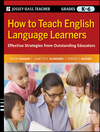


How to Teach English Language Learners: Effective Strategies from Outstanding Educators, Grades K-6
Diane Haager, Janette K. Klingner, Terese C. Aceves
ISBN: 978-0-470-39005-4
Paperback
208 pages
December 2009
US $29.95


Click on the photo of the book to take you to a page where you may peek inside it.

This title interests me because I have often said that I suspected my child w/ an autism spectrum disorder diagnosis was learning English almost as a second language. Her babbling and jargon was different from other children, as if she were hearing different spoken sounds. As I watch her and other children like her struggle with language development, I often wonder if there are strategies we can borrow from professionals who teach ELL whose first language is not English.

I sometimes (okay, often) read (sometimes skim) a non-fiction book from the back to the front first. The last chapter, "Conclusion: Putting It All Together" happens to be an incredible wealth of information for not only teachers of ELL but all teachers, even parents in homeschool settings.
This book uses "vivid portraits of effective teachers at each tier of the Response to Intervention model." (p 161) The authors do a nice job using anecdotes to illustrate the concepts, with "Stop and Think" bubbles along the way to spotlight for readers/teachers the "why bother" and "how might you apply this concept?". The authors know the obstacles to teaching ELL in a big classroom and offer strategies about how to give the needed attention and individualization to the students who need it. I like the emphasis on the importance of including the parents of the students in learning.

The table of contents is HERE and a sample from a chapter is HERE.

How To Teach English Language Learners is aimed at exactly what the title describes, and yet, it contains information that is supportive and encouraging to any teacher.


Teacher Collaboration for Professional Learning: Facilitating Study, Research, and Inquiry Communities
Cynthia A. Lassonde, Susan E. Israel, Janice F. Almasi (Foreword by)
ISBN: 978-0-470-46131-0
Paperback
208 pages
December 2009
US $30.00

Click on the photo of the book to take you to a page where you may peek inside it.


One of the schools my daughter attended prior to becoming homeschooled practiced a staff collaboration. That school was the best of all the schools she attended prior to my withdrawing her. The principal was an advocate of collaboration and found a successful model to use at her school. And it worked.

I suspect that teachers like the many positive outcomes of collaboration. They grow peer relationships, they develop professionally, they become better teachers, and their students benefit.

I also suspect that there are enough negatives to the practice of collaboration that discourage schools from using it. How does a group organize and begin? How does a group focus? How does the group maximize time? Teachers have lives outside the classroom, and wasting time on the planning, scheduling, group bonding/dynamics, personalities, obstacles and roadblocks can make a group ineffective or stop it before it begins.

Potential collaborative groups need a model. A guide. Words of wisdom from folks who've walked this road ahead of them. Two authors, 31 contributors - "Teacher Collaboration for Professional Learning" is packed with experience from educators.

"Teacher Collaboration for Professional Learning" is a book that has a more limited audience, one that teachers and school-building staff will appreciate, and it's a book that describes the team-approach that so many parents wish their school staff members would implement at their schools in an effort to make improvements in the classroom.

Cynthia A. Lassonde and Susan E. Israel provide the "why bother" and "how to" of collaborative research for teachers and school staff members. The authors and contributors provide an amazing amount of guidance to help school staff begin and complete collaborative research, including the sometimes tricky element of group dynamics and helping a group troubleshoot potential obstacles from the get-go. The appendices are a wealth of practical information: The authors provide all of the forms a group might need in Appendix A; questions for reflection in Appendix B; group exercises, resources and a survey in other appendices.

The table of contents is HERE. A sample chapter is HERE for readers who would like to look inside.


Stay tuned - I have a new book about dyslexia from Jossey Bass Teacher. Information coming shortly.


Jossey-Bass, an Imprint of Wiley, sent me these three books (at no charge) to review on my blog. I received no compensation.

Tuesday, November 24, 2009

Three New Titles from Jossey-Bass Teacher

I am an "accidental homeschooler". I didn't start out to homeschool my child. And when I finally made the move to bring a child home from public school, I was absolutely and completely wowed by the resources available to homeschoolers, resources I'd never sought prior to withdrawing a child from school.

As a homeschooler, I am finding the opposite is true, too. Families who have been homeschooling forever don't know about a lot of the resources marketed to school-building teachers, especially the resources written for and by the special people who teach children with unique learning styles and needs.

Jossey-Bass Teacher, an Imprint of Wiley, sent me three brand new books at no charge so that I may tell you about them her on my blog. All three new books are aimed at school-building school staff, and yet, the titles are deceiving, because there is an incredible amount of information for homeschooling parents *and* for parents of those children in school buildings who have the unique learning styles and needs.

When my child was in public school, I liked to know what the staff members were learning. As a parent, I often went to workshops for teachers. The workshops usually set me up to be angry and upset, because I rarely saw the school staff pushing to accomplish the wonderful strategies I learned about in the workshops. Change was too slow to happen, and ultimately, became one of the reasons I withdrew my child from school. But if parents are going to hold school staff accountable, parents need to know what options are out there, what successes other schools are having and why. And those who choose to homeschool need proven strategies and techniques, to, to use at home. Jossey-Bass gives administrators, teachers, and parents three new books covering different topics that do just that.


# # #


Available this month, Sylvia L. DeRuvo brings us "Strategies for Teaching Adolescents with ADHD, Effective Classroom Techniques Across the Content Areas" ($29.95, paperback). Written for professional who works with students in the 6th-12th grades, this one is packed with information. DeRuvo gives the reader insight into the perspective of the student w/ADHD.

As a parent, I want professionals who work with my child to understand her, to be able to see through her eyes. Autism, ADD and ADHD share many "symptoms" and characteristics. What is ADHD? And what is it not? "Behaviors" are often neurodevelopmental. What does that mean? I know that, but a lot of gen ed teachers do not (even some speech therapists, OT's, Sunday School teachers do not). And what does a parent and/or teacher do about it? DeRuvo provides chapter after chapter of understanding and practical ideas and how-to strategies regarding not only behavior, but academics, specifically ELA, math, science, and social studies.

The pull quotes are fabulous. Here's one from page 40 in a chapter about using research based teaching strategies: "The classroom teacher moves from being a teacher of content to being a teacher of students." (YES!!!)

DeRuvo guides teachers (and parents) in scaffolding within the student's "zone of proximal development" (a Vygotsky term -- where have I heard that before?!) of new information for the student, using what she describes as "we do" (p. 96), where students work with the teacher and the teacher gently hands more and more responsibility to the student in notetaking. In other words, she takes a relationship approach, and not just teacher-student relationship, but student-student.

I am not a school-building-teacher. And my child is not an adolescent. I am a homeschool teacher of an elementary school aged child, and I find the book useful. The strategies are helpful whether you're the parent of a school-building student, a homeschooling parent, or staff at a school. If you are a pro-active parent who looks for helpful books to give to the teachers of your children, put this one on your shopping list and prepare to buy it in bulk.


# # #


The next two books light a fire inside me, make me want to return to college to get another degree, this time in education, so that I can be part of the change our kids need. They are inspiring and I was nodding along in agreement as I read.


# # #


Also available this month, "SMALL SCHOOLS BIG IDEAS, The Essential Guide to Successful School Transformation" by Mara Benietz, Jill Davidson and Laura Flaxman ($30.00, paperback)

I. love. the. ideas. in. this. book!

Who (in my opinion) is this book for? It's for any parent who is questioning the education their child is getting at a school-building school. It is for a homeschool co-ops. It's for any teacher or school administrator, school board or board of education member.

The authors take the time to explain the "why bother" of transforming a school. One question the authors examine is what are the "twenty-first-century skills" that are considered necessary for today's workplace? (An aside: Our autism intervention of choice, RDI®, considers these lists of characteristics important to employers, too, as part of a remediation approach.)

Once you know what "survival skills" are considered valuable, you have to ask the question, how do we grow those characteristics in young people?

The answer is not in teaching to tests or in rote memorization and regurgitation of material.

The answer is in teaching students how to THINK instead of teaching for memorization to standardized tests. Small Schools Big Ideas explains why and how to accomplish teaching children, teens and young adults how to think, collaborate, and, as John Dewey describes, to "use their minds well". (p. 6)

We haven't been involved in a homeschool co-op, with the exception of a couple of art classes, but from listening to parents and reading their posts on internet groups for homeschoolers involved in co-ops, I suspect that homeschool co-ops are super examples of the kind of teaching and learning that is going on in co-ops for homeschoolers. In fact, I think homeschool co-op organizers and participants might find the information in this book quite useful.

Divided into four sections, Small Schools Big Ideas is thorough for the reader who is serious about how to make transformation work. Part One describes the change that needs to happen, including obstacles and options. Part Two focuses on active participation of both staff and students. Part Three "delves into the inner workings of Essential schools.". (p xxix). Part Four is called "Embedding Successful Change".

This book excites me and depresses me all at the same time. I used to dream of schools like the proactive schools in this book. If we'd had this kind of school, I'd have never begun to homeschool. If we had the option to move my public-schooled children to a transformed school, I'd do it without hesitation. Problem is, (here's the part that depresses me) I don't see the hearts and attitudes in statewide training program administrators, district administrators, special ed administrators, building administrators and teaching staff that we need in order for this kind of transformation to happen.

This is a book that every parent, educator and school administrator should consider reading as we decide what is best for our students and take steps to make that happen.


# # #


Wayne Sailor brings us an October, 2009, release "Making RTI Work, How Smart Schools are Reforming Education through Schoolwide Response-to-Intervention" ($29.95, paperback, 336 pages).
Response to Intervention is more than a buzz word today. RTI is a federal mandate in our government schools. I have learned more about Response to Intervention than I ever thought possible from this book. Sailor is inspirational and I must have a pen or pencil in my hand as I read this book so that I can underline concepts that stand out to me and write notes in the margins. (I think this book has more acronyms than any other book that I have ever read.)

Parents who hang out on internet chat groups for parent of children w/ special learning needs will tell you that the issue of PBS (positive behavior supports) is HUGE. It's an often neglected and ignored concept, sometimes poorly attempted for the very students who need it the most.

I tend to think about RTI in terms of special education, but RTI is mandated for all students. I associate it with special ed because it's a term tossed around at IEP's and on internet lists for parents of children in special ed. In fact, "Making RTI Work" gives credit to special ed for introducing RTI to schools (page 5). Schools, it seems as I interact with other parents (and sometimes some professionals), don't understand RTI or even evidence based practices in a way that translates into meaningful programming and progress for students in special education settings.

If you've ever had a question (as a parent or a teacher) about your school's understanding of all things RTI, from FBA's to PBS's to evidence based practices, here's the book to explain it all. Check out the table of contents, here.

Sailor acknowledges the problems that schools face and offers solutions. He shows readers what RTI looks like close up in the classroom level, and he zooms out and shows readers what it looks like at a district level. Sailor admits "RTI is not a magic bullet that will fix broken schools," but "it does," he tells us, "create a framework for introducing scientific educational practices into the school." (p 265). That's what this book does -- introduces the reader to the framework, the implementation, the troubleshooting, the long-term plan of RTI.

Who is this book for? Anyone, teacher, administrator, therapist, parent -- with an investment in students who would like to know more about RTI. It opened my eyes, lifted my hopes for those still in school-building settings, broadened my understanding of Response to Intervention. I suspect it will do the same for you.

# # #

Saturday, October 10, 2009

How Can My Kid SUCCEED in SCHOOL? (a Wiley review)

"She's just lazy!"

"He keeps making stupid mistakes in his math homework."

"She is impulsive and rushes through assignments and makes careless mistakes."


"I know he's smart, but he doesn't apply himself."


"She doesn't listen to the instructions."

"He's so disorganized!"

If you are the parent or teacher who has ever thought or said one of these sentences about a student, here is the book for you:

"How Can My Kid SUCCEED in SCHOOL? What Parents and Teachers Can Do to CONQUER LEARNING PROBLEMS" by Craig Pohlman, Ph.D. ($19.95 from Jossey-Bass Teacher, a division of Wiley) is an incredibly helpful resource for parents and teachers who have a struggling student.

Pohlman approaches student struggles from a neurodevelopmental perspective, and he teaches readers about development as he teaches us how to become observers and detectives as we help our struggling learners.

"Profiles, not labels and diagnostic categories, are what we all should be using to describe learners." Pohlman tells readers in the introduction of the book.

I agree with him.

Pohlman uses words that a laymom can understand, defining and describing terms from psychology and education in ways that are useful. Many of us as parents have had to sit through meetings and IEP's where we heard staff members describe in great detail our child's weaknesses and problems. Pohlman does us a huge favor: He teases apart the functions that contribute to student success (or lack of it) including attention, organization, memory for the reader in a way that illuminates a student's strengths, too.

I am seeing all of my children in new ways because of Pohlman. I even see *ME* in the pages.

He uses case studies and examples to illustrate terms and concepts, allowing me to see how one part of a student's memory or attention might be working well and another part of memory or attention may be faulty or developmentally delayed. And in the following chapter, he gives us ideas on how to help the child based upon the profile that we see through our observations and detective work. He does the same for teachers at school in two more chapters, cautioning us to avoid jumping to conclusions, and instead gather lots of information before trying to interpret it.

I love the fact that Pohlman does not consider struggling students "lazy" or "careless" or "manipulative" or "behavior problems"!

He describes challenges in a way that readers can recognize strengths and weaknesses and in following chapters, he describes ways we can go about helping the child with intervention and accommodations. He's big on modeling for a child, and he suggests creative games to grow weak functions.

I like this book! (!!!!!) I have underlined passages and written notes in the margins, and there are sections that I've revisited to digest the material again. It's a really practical guide to helping a student who is struggling, beginning with how to recognize what's what and following through with how to use strengths and accommodations to strengthen the weaknesses over time. I did not know how critical long-term memory is for math, and I certainly have a new focus for one of my children in that area.

In Chapter 4, Picking Strategies for the Classroom, the first of several starting pointers is so important to both parents and educators: "View these strategies as course corrections, not add-ons." It's a philosophy I've come to embrace, and yet I still need to be reminded of this point.

Since my child qualified for special education services more than eight years ago, I've never seen information that describes for me how to go about "smart shopping" for educational assessments. Pohlman gives us an entire chapter on choosing the right expert plus chapters on "Getting the Most Out of the Assessment Process" and "Using What You've Learned from the Assessment". Pohlman walks a parent through what to say to a clinician who is intent on labeling a child as opposed to providing a "thorough description of ... strengths and weaknesses". The entire table of contents is here.

Pohlman provides a profile worksheet and a handy reference section at the back of the book. If you're like me, you'll be flipping back and forth, referencing and cross referencing sections and writing in the margins. Maybe you'll read it with a highlighter in one hand.

Sometimes, books are not worth the money and shelf space at home, and I think I'm better off borrowing the book from the library for a short term read. This one's a KEEPER -- one for the shelves at home, one to refer to again and again.

PS: I received this book free of charge from WILEY so that I could review this book for you, here.

Wednesday, September 30, 2009

Homeschooling the Child with AUTISM Book Review

When a child is diagnosed with autism, the parents often feel inadequate to intervene and to teach that child. There is a mindset that teaching individuals on the autism spectrum is best left to "professionals", when in fact, to quote Dr Jeannette McAfee in the forward of Homeschooling the Child with Autism,

"...a homeschool environment can be the single most effective place for some children with autism to learn, grow and achieve their maximum potential. In many cases, a child learning at home will acquire far more knowledge and experience in social skills, academic skills, life skills, and executive functioning than he or she would absorb in a typical classroom setting."

Homeschooling the Child With Autism, Answers to the Top Questions Parents and Professionals Ask, by Patricia Schetter and Kandis Lighthall, ($22.95 from JOSSEY-BASS TEACHER, a Wiley Imprint)

McAfee states that,

"Authors Schetter and Lighthall have done an excellent job of debunking the myth that only credentialed teachers can teach academic subjects successfully."

And McAfee is correct.

If you are a parent who is wrestling with the idea of homeschooling a child who has an autism diagnosis, Schetter and Lighthall have pulled together information to help you through the decision. The authors included a great deal of input from five homeschooling moms whose children are on the autism spectrum, allowing readers to peek into their lives and homeschools in a way that reveals the creativity and flexibility that homeschooling allows a family and the opportunities for success at home that were not possible in a school-based setting.

Take a peek: Table of Contents is HERE; Chapter 1 is available HERE.

The homeschooling moms are generous in their descriptions of what they do at home. The authors and the moms provide some troubleshooting and "how to" strategies and they provide resources for more information, as well. In Parent Perspective sections, they offer readers "snapshots" of what they're able to do better or differently to meet individual needs via a home setting.

As a parent using a neurodevelopmental, relationship approach of intervention with my daughter, I disagree with some (not all) of the material devoted to teaching social skills and social thinking. They do offer some really wonderful descriptions of social opportunities (there are quite a lot when you homeschool, which surprises people.)

When I received my copy, I jumped to the back of the book to read the Q&A with the moms and the interviews with the students. I like that section a lot!

If you're new to homeschooling a child on the autism spectrum or are considering homeschooling as an option, this book will be helpful to you. If you're homeschooling a child and are struggling through some challenges, you will find the Parent Perspective sections helpful, as other homeschooling moms share what worked or didn't work for them. School teachers may find some of the strategies helpful in a school setting as well.

Homeschooling the Child With Autism, Answers to the Top Questions Parents and Professionals Ask, by Patricia Schetter and Kandis Lighthall is a solid resource, particularly for newbies and those sitting on the proverbial homeschooling fence.

Thursday, September 10, 2009

Review and Giveaway: The Autism Checklist by Paula Kluth, Ph.D. with John Shouse


I have spent a great deal of my time and energy the past 8.5 years learning about autism. I know so much about it that I have trouble condensing information for people who don't eat, breathe and sleep with autism the way I do. We constantly interact with people who interact with my daughter but know little to nothing about autism, from the figure skating coach to babysitters to Sunday School Teachers. I, like most parents in my situation, need a resource, something we can give to or recommend to teachers, coaches, church volunteers, even friends, family and neighbors.

One book that many of us buy in bulk to give away is, "You're Going to Love This Kid," by Paula Kluth PhD. It's about inclusion in a school setting.

I've seen Dr. Kluth present three times, and she always amazes me! Kluth is one of the most understanding professionals in terms of understanding the blessings and the challenges that come with autism and describing those characteristics to people who teach or live with an individual on the autism spectrum. She can step into the shoes of a student on the autism spectrum and understand behaviors that other professionals label as "non-compliant" or "maladaptive" or "manipulative", interpret the behaviors for the rest of us. She is able to teach us about what she sees through their eyes so that we can be better parents and teachers to our kids.

She creatively addresses challenges and supports students on the autism spectrum and shares her successes with the world.

I've known of John Shouse for several years, having "met" him (online) when I was a chapter leader for my local ASA chapter. He has a child on the autism spectrum and is an incredible resource and advocate for families like mine in Tennessee.

Kluth and Shouse have teamed up to write, "The Autism Checklist: Practical References for Parents and Teachers" and when I read about the book before it was released, my expectations were high.

I was not disappointed. (Two thumbs up!) You'll need a highlighter and your sticky notes to mark pages, if you're like me. This is one you're going to want to order in bulk, so you have one to keep and some to loan or give to teachers, church staff, coaches, and others who interact with your family member who is on the autism spectrum. You might even make it required reading for anyone who interacts with your child!

What's inside? The book is filled with practical tips and strategies that can be implemented immediately. Do's, don't's, some answers to "why does he do that?", with idea after idea for setting an individual up for success.

The book is organized for easy access to specific information, offering five broad categories (Basic Info, Parents, Teachers, Helpful Strategies for Home and School, Resources) and within each category are short sections that are simple to search in terms of finding specific information and that are easily read in a few minutes. The table of contents is here if you'd like to take a peek; some chapter excerpts are available here. Most of the classroom tips and strategies are applicable to homeschoolers. I like the fact that Kluth and Shouse include a lot of information on sensory challenges and movement differences in autism, two topics that are sometimes shortchanged in books about autism.

The resource section is impressive. There are products, organizations and web sites that are new to me (and I thought I knew them all!).

The book is definitely one to recommend or to own to loan to individuals who work with your child, especially those who are brand new to autism.

Here's ordering info:

The Autism Checklist: A Practical Reference for Parents and Teachers ($15.95)
Paula Kluth
ISBN: 978-0-470-43408-6
Paperback
256 pages
September 2009, Jossey-Bass

GIVEAWAY for US Readers: I have one copy of The Autism Checklist: A Practical Reference for Parents and Teachers to give away to a reader. Leave a comment on this post indicating you'd like to enter. I'll do the drawing Friday, 18 Sep 09. Be sure to leave me a way to contact you. ;)

OnePlusYou Quizzes and Widgets

Created by OnePlusYou -

Stat Counter