Showing posts with label book review. Show all posts

Friday, July 8, 2016

The Life We Never Expected Review

Expectations. Mine have been shattered over and over. Shattered expectations at church carry the deepest hurt, cause the most painful wounds. I have to remind myself that Christians are human and they are not God. When humans are not good ministers to families like mine (with a child with autism who has lots of co-occurring conditions), it reflects on them, not on God. I have to keep reminding myself of this.

I struggle with the difference between what is and what should be, continuing to reach what should be. The battle is real.

Authors Andrew and Rachel Wilson are parents of two children with special needs. They are Christians. And they wrestle with the same opponents that I do. Expectations. What Should Be. What Is. The biggest battle is the one happening in my head. And they, like me, make progress and then regress, back and forth. They understand.

The Wilsons arranged the chapters of "The Life We Never Expected" in five sections: weeping, worshiping, waiting, witnessing, breathe. Rachel writes some of the sections and Andrew writes some of them.

I always hold my breath a little bit when I read a book by Christian parents of a child or children with special needs. I have a lot of pain and grief, and I know my God can handle my pain and my grief, my negative emotions. I don't want to be criticized for having negative feelings or for admitting the emotions that are ugly. I do not want to be preached at in a holier-than-thou way. I want to be understood.

And the Wilsons understand. The book is loving, not preachy. Real, not rosy. I love that they reference the Psalms so much in the book. Sometimes, I think I spend too much time reading the angry Psalms, but it is there that I see myself and it is there that I am understood. I know I can't spend all my time there, and yet, being there, hearing the Psalmist's cries, is comforting, because I am not alone.

The Wilsons clearly have more skin friend and family support than we do. We have zero.
"These days, we can't even get through the day without the church, let alone save the world. We are totally dependent on a community of people--people who help, encourage, pray, serve, take responsibility--to be fruitful in any way at all." Andrew writes on page 47
and 
"Something especially bad happens, you hit a new low, and you cry out for help from y our friends and family, who rally around to help in a short, intense, and irreplaceable way."  Andrew writes on page 63.
They have live in support and a set of grandparents who help once a week. Yeah, we don't have that. Family is 150 miles away (which is better than the 600+ it was for many years) and we have not been able to build a network of support in this town where we moved five years ago. We stopped going to church because the obstacles were too great.


I still struggle with comparisons. I am a work in progress.I am trying not to turn the book's anecdotes into a pity party. And in this book, the Wilsons give me solid, doable, practical suggestions on how not to become a pity party.

The book retails for $8.82 on Amazon at the moment I am typing, is 152 pages short, yet the material is solid and useful. The book is physically small enough to fit inside my purse if I want to read it in a waiting area while my child is in a class or lesson.

There are two sections that really jump out and grab me right now, where I am. One is written by Rachel and one is written by Andrew. Rachel's reminder that my first thought, my first reaction to a situation or event is often not to be trusted touched me deeply. It is something I have learned about myself but have never articulated, and Rachel articulated for me in a section about finding joy. I needed that. I strongly identify with Andrew's section on prayer at this moment in time.

 I suspect this book will be one that I return to again and again and a different section will speak to me each time, depending upon where I am in that moment. I tend to identify with Rachel in a big way and not as much with Andrew. I wonder if my husband reads the book if he will identify more with Andrew? More books seem to be written to the moms and this one is geared to both the mom and the dad.

"The Life We Never Expected" by Andrew & Rachel Wilson is a wonderful resource for a family with a child or children with special needs.

PS: Andrew & Rachel: I have 15 years of notes about sleep and autism in one long blog post here if you are interested. Maybe something in it will be helpful at your house.
"Disclosure (in accordance with the FTC’s 16 CFR, Part 255: “Guides Concerning the Use of Endorsements and Testimonials in Advertising”):  I did receive a sample of the product in exchange for this review and post.

Monday, May 30, 2016

Mother & Son, The Respect Effect


http://loveandrespect.info/mother-and-son-the-respect-effect/
I had an opportunity to review Emerson Eggerichs' new book.

As I read, Mother & Son, The Respect Effect by Emerson Eggerichs, PhD, I feel as if I am looking in a mirror. I suppose that I expected a one sided book about how males are, and instead, Eggerichs gives me quite a lot of information about how females are in contrast to how males are.

Eggericks teaches me that "Love-talk is the mother tongue of mothers." Yet, our boys' first language is that of respect. My entire framework, the lens through which I view life, is a lens of love and relationship. The men in my family view life through the lens and framework of respect. And love and respect are very different.

Hint: Appendix A at the back of the book is a quick start guide and I wish I had discovered it first as an overview. :) 

I recognize that my daughters are very different from my son, and I have wildly different relationships with each. I know that girls are different from boys in the way we process information and approach relationships, but I have never been able to define or qualify what makes interaction with my son so different. And in the first chapter, Eggerichs has me hooked. A-ha moment after a-ha moment. More than a little overwhelmed. A lot of the information applies to my relationship with my husband, too. I am convicted with a desire to change. I wish I had had this book a decade ago.

Eggerichs recognizes that this language of respect is not a mother's first language, and he reminds the reader that it is okay for this language of respect, this filter of respect, to not feel natural to a woman when her interaction filter is love. Eggerichs also reminds us that the differences are differences, not issues or right and wrong ways of communicating. He addresses a mother's resistance and the questions she might have in an entire chapter (chapter eleven).

There is so much to like about this book. Chapter 3, "A Game Plan" is about being a guide. RDI families who are familiar with guided participation in autism intervention will really appreciate this chapter. Eggerichs gives readers an acronym from GUIDES and helps us apply the concepts (along with the concepts in chapter four) throughout the book with lots of practical examples. (RDIers will love the examples of declarative statements.)

Eggerich's observation that many mothers say their boys ask, "Can we stop talking now?" is reassuring. It's not just me.

What if the son doesn't behave in a way that he deserves respect? Oh yes, Eggerichs addresses it here.

I know that some of my readers are secular homeschoolers who tend to be very selective before using a Christian resource, and from that viewpoint, Eggerichs does reference related scripture to provide a foundation and to illustrate his points, and yet it is not in an 'in your face', holier than thou, preachy kind of way. If you are not a Christian, you will find the material in the book helpful for parenting a child of the opposite gender. (Yes, there is enough info here for men to have some understanding of their daughters even though the focus is on moms with their sons.)

I urge you to go to http://loveandrespect.info/mother-and-son-the-respect-effect/ and watch the videos that Dr Eggerichs has produced for us. Scroll to the bottom and get the first three chapters free.

Love and Respect's facebook page is here.
The blog is here.

I am so glad I got the opportunity to review Mother & Son. I hope that I am able to take the information in it and make course corrections in myself that make for a stronger bond between the men in my life and me.

Penny

"Disclosure (in accordance with the FTC’s 16 CFR, Part 255: “Guides Concerning the Use of Endorsements and Testimonials in Advertising”):  I did receive a sample of the product in exchange for this review and post.


Saturday, May 14, 2016

The LEAGUE and the LANTERN Review

https://leagueandlantern.com/
My homeschooler and I received a copy of "The League and the Lantern" to review. I always want to qualify the fact that I am reviewing from a special needs perspective. I am homeschooling a teenager who is on the autism spectrum. She has academic delays and we use materials meant for children who are younger than she is. She has been a reluctant reader in the past and will refuse to read if the book looks too difficult with too small print, too many words on a page. We review books as read alouds. My daughter has an unusual rule that she reads just four pages at a time and she will stop reading in the middle of a good part of the story if her four pages are up, which means we are not even halfway into the story. Part of the issue is that I stop her sometimes to check for meaing. When the character shuffles through a dark tunnel, does she know what "shuffles" means? Can she imagine not being able to see where she's going after an explosion? Does she realize that stumbling upon the "lifeless eyes of the redheaded security guard" means they found a dead body?

I am trying to work on her flexibility and occasionally can get her to read a little bit more, but often she tells me I have to wait to hear what comes next. There has not been a read aloud yet that she has gotten lost in enough to keep reading through the story and that is probably an autism thing. 
From an autism perspective or a special needs perspective, the chapters are relatively short. Visually, a lot of children would be able to finish a chapter of The League and the Lantern in one sitting (as opposed to reading four pages at a time). I do like how author Brian Wells made the chapters short. Now to convince the girl to read a chapter at a time rather than four pages. Easier said than done.

I knew this book was going to teach us a lot of interesting stuff when I read "heterochromia iridum" on page 4 in a description of one of the characters. When Wells mentions a matchbox, I wonder if any of my children have ever seen a box of matches and if they found one in the dark if they would know what it is? These are the kinds of stories I like, because they teach my daughter something as we figure out what new terms or unusual words mean. There are 140 key vocabulary words sprinkled in the text with historic sites offering more learning opportunities.

If you have quick access to the internet while you're reading together, you can look up terms together. What is "commando crawling"? You can show your child a video demonstration. There is much to learn here.

The book web site, btw, is packed with fun stuff. The bonus material is especially fun (I think of it as "value added" to the story).

More added value is the fact that the by buying one book, you participate in a  buy one - give one campaign to get books into the hands of kids who cannot afford their own copies. List price of this 282 page hardbook is $17.99.


Since we haven't finished with the book yet, I'll borrow the synopsis from the publicity materials:
The League and the Lantern is the first book in a new adventure series for middle-school readers. It all starts when a dangerous organization invades Jake Herndon’s seventh-grade sleepover. He escapes along with two new classmates, Lucy and TJ, only to face a 48-hour fight for survival on the streets of Chicago. The kids unravel a mystery dating back to the Civil War, and an incredible secret about Jake’s family. Along the way they learn unexpected lessons about courage, family and friendship.
We live in an area of the country where Civil War battles were fought (and lost) and we keep adding to our knowledge about the war. The League and the Lantern is interesting to us because of the Civil War history. (The bonus features on the book web site take us to more history.) I get a little more nerdy about Civil War history all the time and the tidbits in this adventure add more to my nerd factor.

Caution: The book is a thriller, and some of the story may scare some sensitive children. I would not have liked it as a child. I have children who loved this type of material.

The book is 'clean', no cursing, no dating relationships. Wells's storytelling is inviting, and as I read ahead of where my daughter and I are in our read-aloud, I want to keep going at the end of each chapter. Learning that author Brian Wells is employed in network television comes as no surprise. He knows how weave a tale. Honestly, I am concerned that my girl will miss a lot of the meaning in the story at this point because of her delays (a heads up for those of you whose children w special needs struggle with reading), however, I am enjoying how the story plays out. I wish the series had been available when my kids were little. They would have loved this.

Thank you, Brian Wells, for the autographed and numbered copy of the book!

"Disclosure (in accordance with the FTC’s 16 CFR, Part 255: “Guides Concerning the Use of Endorsements and Testimonials in Advertising”): Many thanks to Propeller Consulting, LLC for providing this prize for the giveaway. Choice of winners and opinions are 100% my own and NOT influenced by monetary compensation. I did receive a sample of the product in exchange for this review and post.

Sunday, April 3, 2016

Under The Sea Holy Bible Review & Giveaway


Even though it is marketed to children ages 6-10, my teenage homeschooler with ASD and I are enjoying the Under The Sea Holy Bible from Zondervan (list price $24.99). You never know about Bibles for kids. Will it be cheesy? Silly? Inviting? You never know until you get to open it and use it.

As soon as I opened the package, I find a sensory perk. The front cover and book spine illustrations are textured. I like to run my fingers over them. I suspect sensory kiddos will enjoy that feature.

The New International Reader's Version is attractive to my daughter, who can be a reluctant reader. Too much text on a page and she sometimes shuts down. The NIrV is designed to be very easy to understand. I gave my daughter the Under The Sea Holy Bible and told her we get to review it and the next thing I knew (same evening) she came to me and told me she read the first 12 chapters and she narrated aloud what she'd read. I am impressed.

A lot of stories and concepts about religion and from the Bible are difficult for children and sometimes for individuals on the autism spectrum. I continue to search for resources that are inviting and fun for my daughter with ASD. One feature of the Under the Sea Holy Bible is that it makes some difficult concepts easier to understand. See the Ten Commandments to the left as one example.

I like the page that spotlights children in the Bible in a sort of scavenger hunt style where the clue peaks curiosity and sends the child looking for the answer if she doesn't already know the answer.

The Under The Sea Bible has six of these colorful, illustrated pages that outline a topic or concept. There's even a page that outlines the ABCs of becoming a Christian. (Admit Believe Confess).

The NIrV is easy to understand and I suspect it may become my daughter's preferred version. We have enjoyed having this item to review

The hardback is available at Barnes & Noble, Walmart, and Family Christian Stores.

You can follow Zondervan on Facebook and Twitter.


"Disclosure (in accordance with the FTC’s 16 CFR, Part 255: “Guides Concerning the Use of Endorsements and Testimonials in Advertising”): Many thanks to Propeller Consulting, LLC for providing this prize for the giveaway. Choice of winners and opinions are 100% my own and NOT influenced by monetary compensation. I did receive a sample of the product in exchange for this review and post.
 Only one entrant per mailing address, per giveaway. If you have won a prize from our sponsor Propeller / FlyBy Promotions in the last 30 days, you are not eligible to win. If you have won the same prize on another blog, you are not eligible to win it again. Winner is subject to eligibility verification.”

I have a copy to give away to U.S. and Canadian readers. Just comment for an entry. I will choose a winner, Monday, April 11th, 2016. Please comment to enter!
 

Friday, January 22, 2016

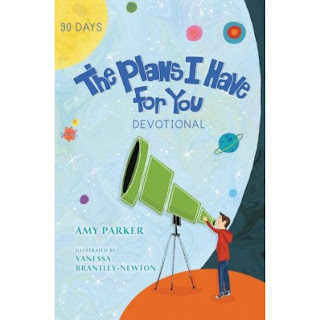
"The Plans I Have For You" Devotional and Journal Review

We sometimes get an opportunity to review an item that is geared for a demographic that is younger than my homeschooler. My homeschooler is a teenager who is on the autism spectrum and has academic and other developmental delays, and we often use materials for younger grade levels for teaching and learning. We work at her developmental level, not at the grade level that is associated with her age.

http://www.zondervan.com/the-plans-i-have-for-you-devotional"The Plans I Have For You" Devotional is a 90-day devotional with a verse, short commentary, and gorgeous, age appropriate illustrations on each page. It is hardback, 160 pages, about the size of a tablet (easily fits in a tote bag or large purse for traveling or time in waiting rooms). The suggested age range is 8-12 years old. The devotional retails for $14.99.

"The Plans I Have For You" Journal is meant to accompany the devotions and is paperback with pages that are blue and cream/gray (awesome on sensitive eyes!!!!) and retails for $12.99. The journal is the same size as the devotional, 208 pages long.

http://www.zondervan.com/the-plans-i-have-for-you-journalMy daughter's review: "PRETTY COOL". She likes that the pages are not dated and that if we skip a day she doesn't feel behind or that she failed.

Author Amy Parker and illustrator Vanessa Brantley-Newton have done a fabulous job with this set of study materials!

The pages of both books are inviting and fun! My girl will not entertain an activity that is simply a bunch of words on a page. Too much text, no illustrations, are overwhelming to her.  In terms of using these resources with a teen who has unique learning needs and developmental delays, the devotions and journal prompts are short - a plus when you have a child who sees 'too much' text on a page and shuts down.

My girl has been asking me a lot about her purpose, about why she is here. "The Plans I Have For You" set is a perfect addition at home at this point in time. The devotional and journal walk us through God's plans and desires for us, God's love for us, who God is, it talks about our plans, the plans of others (Jonah, for example), and in our situation at this point in time, is a really solid resource for talking to my girl about her dreams and God's plans for her. She wants to be an actress of some sort. We'll see. She has gifts in the area of fine arts. God can use her there.

My daughter and I are enjoying the pair and she tends to sneak off with them and read and write without me. I find that some of the concepts are abstract and harder for her to understand and I prefer to do them with her so that I can facilitate the understanding of concepts for her. Her private thoughts are her own and I won't include a photo of her work in the journal for that reason.

I find that I need to look ahead, to preview, future lessons so that I can figure out how to present them in ways my child can understand. The other option is to allow her to work through them without me and hope she gains some understanding. I don't know how much she is understanding and absorbing and I trust that she is understanding and absorbing something.

Here is an example to show you what I mean:
"Who is this that OBSCURES my plans with words without knowledge?" - Job 38:12
"God spoke these words to Job and his friends.
In your own words, what do they mean?"
If you have a teen with special learning needs and developmental delays, I do find this resource for aimed at younger children a good one. Expect to make some accommodations to the material if your child is very concrete (but we parents are accustomed to doing that, anyway.)

We've used a lot of Zondervan products over the years (my favorite is when I see them at a homeschool convention) and they always seem to produce quality products. Please follow ZonderKids on Facebook and Twitter. 
"Disclosure (in accordance with the FTC’s 16 CFR, Part 255: “Guides Concerning the Use of Endorsements and Testimonials in Advertising”): Many thanks to Propeller Consulting, LLC for providing this prize for the giveaway. Choice of winners and opinions are 100% my own and NOT influenced by monetary compensation. I did receive a sample of the product in exchange for this review and post. Only one entrant per mailing address, per giveaway. If you have won a prize from our sponsor Propeller / FlyBy Promotions in the last 30 days, you are not eligible to win. Or if you have won the same prize on another blog, you are not eligible to win it again. Winner is subject to eligibility verification.”
Tuesday, September 1, 2015

The Bridge Builder: The Life and Continuing Legacy of Rabbi Yechiel Eckstein Review


The Bridge BuilderI grew up in the South of the United States, in the buckle of the Bible Belt. There were three or four Jewish families in my small hometown and I knew nothing about them. I always wanted to know. My Jesus is a Jew. I do remember one Sunday, Mrs. Cook brought in one of the Jewish men of our town, who talked to us about Christianity's Jewish roots. I always wanted to know more.

Fast forward to my time in the Midwest in an area where there are lots of Jewish families. My children learned about Jewish traditions and holidays from friends from school. And then we learned about Friendship Circle and began to learn even more. (The Jewish community reaches out to families with special needs children in a way that Christians do not.) I longed for a collaboration between the Christian community and the Jewish community in terms of serving families with children with special needs and sometimes vocalized my desire on deaf ears in my Christian circles. Now we live in the South again, where we don't interact with Jewish families on a daily basis and I don't know where to begin thinking about a collaboration.

When I was given the opportunity to review The Bridge Builder: The Life and Continuing Legacy of Rabbi Yechiel Eckstein, I was thrilled.

No, the story is not about serving families with special needs. It has nothing to do with special needs.

The story is Rabbi Eckstein's incredible journey bridging the gap between Christians and Jews and between United States and Israel, from a culture that forbade him from interacting with evangelicals to not only interacting, but building relationships with evangelical Christians - and the price he paid to do so. As he went against the teaching of his culture and religion, he sometimes sacrificed his reputation and his friends and family in order to build this bridge.

The book is as much a history book as it is a biography, giving the reader insight into the world political stage and the religious and political climates in Israel and the United States at the times of different events on Rabbi Eckstein's timeline in the last 40 years. I haven't studied history in years, my memory and understanding are weak and fuzzy and I need the detail for my understanding as I read.

I never gave much thought to how much work would have to happen to bring Jews and Christians together in ministry. One would just ask the other and the other would say 'yes'. The effort has not been a simple one. There have been big barriers to work around and remove. The process has been a labor of love over decades. I love Rabbi Eckstein's heart and how he followed the calling he felt from G-d. And I understand a little better some of the challenges that need to be addressed for a collaboration in terms of helping families with a child with special needs.

Author Zev Chafets goes into great detail to give the reader enough background and context and he gives the reader an authentic look into the life of Rabbi Eckstein, good, bad, ups, downs. He's human. And he loves people. I enjoy the peek into Rabbi Eckstein's life. I suspect that you may enjoy it, too.

Know this: His work is ongoing; there is more to his story yet to unfold. Follow Rabbi Eckstein on the internet and social media to see what events are added to his story. Don't miss the social media - the Rabbi Eckstein web site offers a free chapter of the book.

                                          http://www.rabbieckstein.org
Twitter:  @TheFellowship
                     @RabbiEckstein

                  https://www.facebook.com/RabbiEckstein


"Disclosure (in accordance with the FTC’s 16 CFR, Part 255: “Guides Concerning the Use of Endorsements and Testimonials in Advertising”): Many thanks to Propeller Consulting, LLC for providing this prize for the giveaway. Choice of winners and opinions are 100% my own and NOT influenced by monetary compensation. I did receive a sample of the product in exchange for this review and post.

 Only one entrant per mailing address, per giveaway. If you have won a prize from our sponsor Propeller / FlyBy Promotions in the last 30 days, you are not eligible to win. If you have won the same prize on another blog, you are not eligible to win it again. Winner is subject to eligibility verification.”

Thursday, February 5, 2015

The Adventures of Stretch More


http://www.woodbinehouse.com/main.asp?product_id=978-1-60613-201-2
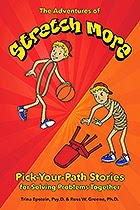
One of my favorite professions, Ross Greene, Ph.D., has co-authored a book for children with Tina Epstein, Psy.D. The Adventures of Stretch More (list $18.95) is a 132 page book of "pick-your-path" stories for children and teens.

I adore Dr. Greene! I had the opportunity to attend a presentation about "Lost at School" in Michigan several years ago. Ross Greene, Ph.D. "gets" our kids. He reminds us again and again, "Kids do well if they can."

Stretch More is a kid made of a rubber band who is rigid and is learning to be flexible. The stories in the book are written about common events that happen in all our lives. Each story is broken down into parts where the reader is allowed to choose how he/she would respond in that situation and then the reader is directed to a new page to read material that follows up on that chosen response.  

The Woodbine House promotional materials describe the concept of the book very  well: 

This is the first children's book to demonstrate Collaborative & Proactive Solutions, a therapy method that presumes kids act poorly because they lack the skills to deal with challenging situations. Together, parents and children learn how to defuse the tension and build a more supportive approach to improving behavior. A perfect book for kids ages 8-13 who have ADHD, Tourette's, OCD, or Asperger's that also includes an information section for parents."

My homeschooler and I dove right in. We read about the botched breakfast. Almost immediately, my girl found a way that she identifies with Stretch.  We talk about how she is like Stretch, how she is different from Stretch. And of course, we don't read just the ending she would choose; instead, we read all the endings. The stories give us fuel for discussion later - something I am seeing more and more. My girl needs a long time to process a concept, and we revisit situations and the endings again and again as she processes another bit here or there. The stories themselves and the format of the book is very kid and teen friendly.


Peek inside! An excerpt of the book is here.
Table of contents is here. 
 
Disclaimer: Woodbine House sent me a copy to review for you. I was not paid for this review and am not obligated to provide a positive review.

Monday, June 9, 2014

Mariano Rivera's Story: The Closer

The guys at my house love baseball. They are not New York fans, but when I got the opportunity to review The Closer, My Story by Mariano Rivera with Wayne Coffey, I jumped on it.

I have the impression that the lives of major league baseball players are easy and have always been easy. I picture these men as golden children who were naturally talented and landed in the major leagues without much effort.

Mariano Rivera's story burst a bubble in the fairy tale in my mind about major league baseball players.

He grew up a kid in a poor country without a proper baseball anything. No baseball diamond. A glove made from a milk carton. A stick for a bat. Who would ever dream that a boy's accuracy in killing iguanas  with rocks to put food on the table would translate into a young man's ability to throw a baseball with that same accuracy?

His life plan was to be a mechanic. He retired as the best relief pitcher in baseball and one of the most popular MLB players in history. (His is the most popular jersey sold today.)

The story of how Mariano Rivera made it from a fishing town in Panama to Yankee Stadium is captivating. Rivera experienced a lot of what I call God-incidences in his life, and he is quick to reveal his his own awe and his own faith to readers and he reminds us that his success and blessings come from God. Rivera gives us glimpses into what he was thinking every step of the way and that insight and perspective draws me deeper and deeper into his story. (I have to admit that I would like to read a companion book by Rivera's wife, Clara, the story from her perspective, too!)

My son, the baseball nut and Detroit Tigers fan, read the book first. He said Rivera's story is humbling. Rivera started with very little compared to what we have. My son calls Rivera an inspiration after reading the book.

The Closer is a 288 page hardback list priced at $28. I highly recommend it for all the baseball fans and non-fans in your life. Barnabas Agency gave me a copy of The Closer at no charge to review here on my blog. I was not paid for this review and am not obligated to provide a positive review.

Monday, December 30, 2013

Essential First Steps for Parents of Children with Autism Review


Woodbine House sent me a review copy of Essental First Steps for Parents of Children with Autism by Lara Delmolino, Ph.D., BCBA-D & Sandra L. Harris, Ph.D.

Disclaimer: I was given the book at no charge to me. I am not obligated to provide a positive opinion.

Essential First Steps is written for parents of toddlers through kindergartners with a recent autism diagnosis. It's a good size to slip into your purse or diaper bag to read in a waiting room (parents of kids on the autism spectrum tend to spend a lot of time in waiting rooms), a soft cover of 152 pages. Priced at $21.95, at the time I am writing this post, the book is on sale for $12.71 via Woodbine House.

Essential First Steps gives readers ten chapters, with each chapter beginning with a relatable vignette about a family.

Chapter 1 describes and defines autism and terms related to diagnosis and treatment.

Chapter 2 is a very basic intro to ABA. 

Personal sidebar: ABA is one of the interventions I wish we had not done.

Chapter 3 is a cheerleading section for ABA. 

Personal sidebar:  I'll have to admit, ABA worked. Yes, my child did learn everything we taught her in ABA. However, we checked off skills from the ABLLS one by one as if the things we were teaching were discreet skills and not part of a continuous process model; for example, we taught her pointing as if it were merely a mand and not a huge expression of joint attention. We created the robotic, prompt dependent child they promised would not happen and we left her with a bizarre set of splinter skills with no foundations because none of our behaviorists (we had five or six in three years) understood development.

Chapter 4 is about early intervention and school, IEPs (and ABA).

Chapter 5 is about helping your child relate to others, ABA style.

Personal sidebar: Developmental approaches worked far better than behavioral approaches in terms of social reciprocity and joint attention at my house.

Chapter 6 is about verbal communication.

Personal sidebar: There is heavy emphasis on manding, or requesting. From page 88, "Of course, children with ASD eventually need to learn words for things they are not requesting, but this type of language instruction is a secondary priority at the early stages of teaching."  I strongly disagree with this philosophy based on our experience with it. A developmental approach beginning with non-verbal interaction is better in my experience.

Chapter 7 covers play from a behavioral perspective. See my sidebars above.

Chapter 8 covers self-help skills toward independence.

Chapter 9 is about sensory and behavior challenges.

Chapter 10 reminds parents where to look for support.

Essential First Steps is a basic introduction to behavioral intervention and parents new to the diagnosis who are interested in behavioral intervention may find the guide helpful.

Wednesday, July 10, 2013

Leading A Special Needs Ministry from Amy Fenton Lee


Leading a Special Needs Ministry, A practical Guide to Including Children and Loving Families is a brand new book from an unexpected source. Amy Fenton Lee is a mom. And a CPA. And a PK (pastor's kid). Lee is not a mom of a kid w/ special needs and she's not a professional in the field of all things special needs. Well, not by college degree. She's a professional by experience, from her heart.

Lee has spilled all of her insight and wisdom into Leading a Special Needs Ministry, A Practical Guide to Including Children and Loving Families. 

At 163 pages priced at $18.99, Leading Special Needs Ministry is packed with insight and background about families with children with special needs. Lee - with help from contributors Dr. Alyssa Barnes and Cara Martens, peeks into our world and gives outsiders insight into how to love and serve families like mine. (Disclaimer: I was given a copy of this book to use and review. I was not paid for this review and I am not obligated to give a positive review.)

Fenton addresses the difficult questions and challenges, including (but not limited to) these:
Do you approach a family at church with concerns about their child?
How do we serve a family with a newly diagnosed child?
Do you automatically put a family with a newly diagnosed child on a public prayer list?
What do you say? What do you do?
How do you address safety issues?
How does a church recruit and train volunteers?
What if the child is aggressive?

I am a big fan of addressing the elephant in the room. Amy Fenton Lee identifies the elephants and with the help of some professionals and interviews with parents, she addresses them. She has taken the time to understand both sides, the side of the church staff and the side of the parents, and she has taken the time to educate herself about strategies that are doable in a worship setting, and she shares all.

We did tag-team church attendance for a long time out of necessity. There was not a good place for our kid to go. So, my husband and I took turns staying home with the kid w/ autism while the other took the sibs to Sunday School and church. That scenario is very common all over the country. A lot of us are tag-teamers, never fully included.

I wasted spent several years at a former church trying to get staff and volunteers to do more to include my child. I thought I must be a poor communicator, that there was something I wasn't wording correctly. If I'd had this book, it would have said it all for me. (In retrospect, this church did not have the resources to give to my child. Volunteers were scarce; the many special ed professionals there wanted weekends off; they didn't recognize that I was too overwhelmed and had no energy to try to start a ministry, especially when there were not enough volunteers. That church was not the right place for us.)

The book is so fabulous, so wonderful, I am not sure I can do the book justice in a blog post. Amy Fenton Lee is an angel here on earth advocating for kids like mine. I love love love this book and I have lost count of how many times I've wiped tears away as I've read the pages, so deeply touched by just how much Lee "gets" it and is able to articulate and advocate on behalf of families and kids like mine.

Don't miss the blog posts about the chapters in the book. Here are several:

Leading a Special Needs Ministry Book Study, Week 1

Leading a Special Needs Ministry Book Study, Week 2

Benefits of Providing Special Needs Dedicated Space


Amy Fenton Lee blogs at The Inclusive Church.The Inclusive Church facebook page is here. Lee tweets here. Check out all of the resources for more information. Amy Fenton Lee is a rich wealth of information and tips.

Monday, June 17, 2013

How Do We Know God Is Really There?

Apologia and Author Melissa Cain Travis and illustrator Christopher Voss bring us, How Do We Know God Is Really There?

The Apologia web page summarizes the story nicely: 

Thomas and his father escape to their backyard tree house most evenings to watch the night sky through a telescope. Thomas is dazzled by what he sees of God’s creation, but he has questions. “Dad, how do we know God is out there?” he asks one night. “I know the Bible says He’s there. But how do we really know that’s true?” Together, Thomas and his father begin to examine the cosmological evidence for God’s existence. This is the first in an exciting new series of picture books designed to introduce kids to important questions of the Christian faith in terms even pre-readers can understand. Read this aloud with your family, and you’ll come away knowing that “the heavens declare the glory of God and the skies proclaim the work of his hands.” (Psalm 19:1).

My homeschooler with autism has academic delays, and too many words on a page creates anxiety. She sometimes thinks that a book is too difficult if her "too many words on a page" meter sounds. How Do We Know God Is Really There is laid out nicely for a child whose anxiety rises with reading. The layout has text on one side of the page with an illustration on the other side.

How Do We Know God Is Really There introduces us to astronomer Edwin Hubble and his discovery "...that the galaxies in our universe are moving away from each other...and the farther apart the galaxies get, the faster they move."

I am challenged to explain to my daughter how God is with us without the idea of His being with us not being scary to her. I was hoping this story would get us a little closer to explaining it in a way she can be comfortable with. It is a start. And it's the first in a series. Perhaps the next books will help add to my daughter's understanding.

The hardback book is approximately 46 pages in length and is priced at $16.00.


Saturday, February 23, 2013

90 Days Through the Bible


90 Days Through the Bible, A Devotional Journey from Walk Thru the Bible is a 233 page paperback has a list price of $14.99 brought to us by author and Walk Thru the Bible editor Chris Tiegreen.

As the book title suggests, there are 90 devotionals, each 2-3 pages in length, that are arranged in the order of the books of the Old and New Testaments. Each daily devotion offers readers questions for reflection.

At first, I thought the book was a read-through-the-Bible-in-90-days kind of book. It is not. This walk gives some history and background information and general themes and overviews, zoomed-out big picture kinds of steps, sometimes the things I miss in daily Bible study over specific verses.

An excerpt from Day 16 about the book of Ruth reminds me in the midst of a rather chaotic week from the bumpy autism pathway, "The book is a case study in the scriptural truth that God lifts up he humble and draws near to the brokenhearted. Even in our deepest disappointments, he finds ways to make our lives meaningful and bring us into a place of fulfillment. This process can take a frustratingly long time, but when we demonstrate faith and patience, He makes sure it ends well. And it's always worth the wait."

For those of us who struggle to sit down for quiet time, 90 Days Thru the Bible would be easy to keep in the car for time in pick-up lines at school, for waiting during homeschool baseball practice, while a child is taking figure skating lessons. It is also a good choice for keeping beside the bath tub where a lot of us always have time to read two or three pages during a soak.

The information is interesting and captures my attention and I admit that it is easy to want to read ahead and not stick to one devotion per day. It would be a really good audio-resource or book for my tablet, too. I like this one very much and I am seriously considering using this as a homeschool text for of the questions for reflection. The reflection will make good writing and journaling assignments.

Disclaimer: I was sent a free review copy of 90 Days Thru the Bible. The opinions are my own. I was not paid for this review and I am not obligated to provide a positive review.
90 Days Through the Bible  is a book I received a while ago. I am behind on reviews and this one is apologetically very late.Tyndale House Publishers offered it as it was published last fall and I requested it and tried to begin it in the middle of a busy marching band season and the beginning of homeschooling another child (two total, one with autism, one without). The book was set aside in the busyness of our lives at the time. (I stopped requesting review items because my busyness is not fair to the vendors who trust that I can do this job.)

Autism in the Family (review)

Autism in the Family, Caring and Coping Together arrived as a surprise from Brookes Publishing. Sometimes they send me new books, and this one is a treat.

The process of acceptance and coping with the challenges and demands of autism alongside the grief that we process as we journey this pathway that is so different from the one we dreamed about when we thought about parenthood can be lonely. We parents are often misunderstood by adults with autism who are functioning at a level where their autism is something positive they see to be embraced and celebrated, when in fact, the autism we see is something negative that holds our kids back. (An aside: I have blogged in the past about my opinion that the two sides are in fact one side who happen to be defining autism differently.) The emotions of being a parent of a child with special needs are a puzzle piece that we parents sometimes overlook or ignore.

Naseef addresses both the emotions and the day-to-day challenges of parenting a child on the autism spectrum in Autism in the Family. The combination is unique, in my opinion. I don't remember encountering this combination in all of the books I have read along the way.

Most of the books I read about caring and coping are written by women. Robert A. Naseef's book is a surprise, not simply because it was an unexpected delivery, but because it comes from a male perspective.

His story touches me, reaches my heart, and I relate to his experience in a way I didn't expect. Naseef is authentic, real, a peer, parent of a child with autism.

Naseef is a psychologist as well as a parent of an adult child with autism, and that makes a difference that is evident. He has insight, empathy, and understanding that many professionals in our journey have not had. (Many of our professionals were not parents. Looking back, that was a problem because they had no experience base to perspective take from my point of view as a parent!)

Naseef gives us advice and insight about our children, but more importantly, about ourselves as parents. He reminds me to include my own reaction to my child's behavior in addressing challenging behavior, something our developmental approach has taught me. I'm better at it some days than others. "If you are spending more time correcting your child than guiding and enjoying him or her, then that may be the signal that it is time to seek help." p. 63, Chapter 5, Understanding and Guiding Your Child's Behavior. 

Naseef writes in detail and honesty about topics that are difficult to talk about, write about, and self-examination toward making changes for the better, for the parent, from the inside out. His book plants seed after seed for my self-reflection and growth, something I did not expect when I opened the book for the first time.


The table of contents:

About the Author
Preface
by Cindy Ariel
Acknowledgments

Prologue: A Letter to My Son
  1. My Story
  2. The Emotional Journey: From Lost Dreams and Chronic Stress to Acceptance
  3. Understanding Autism
  4. Starting Over and Falling in Love Again
  5. Understanding and Guiding Your Child's Behavior
  6. Surfing Your Stress: One Wave at a Time
  7. Parents and Professionals: A Partnership in Child Development
  8. Big Boys Don't Cry: The Secret Life of Men
  9. Ordinary Couples, Challenged Relationships: Another Developmental Process
  10. A Different Perspective: Understanding Siblings
  11. Family and Friends: Finding and Building Circles of Support
  12. Adolescence
  13. Adulthood
  14. Reflections on Peace of Mind and Happiness
References
Resources
Index 


I especially like the way he does not ignore challenges and issues that are specific to girls and the autism spectrum.

My one complaint: Naseef is a psychologist, a scientist, and he relies heavily on what science has to say about a cause or a treatment or intervention. While I agree that lots of "snake oil" does exist, there are many therapies and treatments that are safe and that work where the scientific studies lag behind. And I do not believe the science is in, yet, on whether vaccines play a role in autism.

Autism in the Family is a resource I would not have purchased for myself, although it is one that I needed. I'm glad it arrived as a surprise at my front door.

I found an interview with Dr Naseef here, if you'd like to know more about him. An excerpt from a previous book is located here.

Autism In the Family, Caring and Coping Together is available at book stores and online. A 268 page paperback, it is list priced at $24.95.

Disclaimer: Brookes Publishing sent me a free review copy of Autism in the Family, Caring and Coping Together. I am not paid for reviews. The opinions here are my own. I am not obligated to write a positive review.

Tuesday, November 6, 2012

The Boys' Guide to Growing Up

Do you wonder how you will explain puberty to your pre-teen or teen who has developmental delays and/or is on the autism spectrum? I have a new resource to share with you. Woodbine House sent me a review copy of "The Boys' Guide to Growing Up, Choices and Changes during Puberty", by Terri Couwenhoven, M.S.
Books written for typically developing kids about puberty can be too complex for an introduction with a child who has developmental delays.  The Boys' Guide to Growing Up is a solid resource to bridge the gap between where your child is in terms of his physical development and what he needs to know cognitively if he is delayed in areas of comprehension and understanding.  The text is written at a third grade level while the information is geared for boys going through the changes that happen between the ages of 11 and 15 according to the book (the web site gives an expanded recommendation for boys age 9 to 16). The illustrations are clear and simple.

The book is divided into sections about the basics of puberty; outside changes; inside changes (includes voice, feelings, sexual feelings); a section about the penis; then sections that are more 'social skills' in nature that describes safe touch and what is appropriate to share and what is appropriate to keep private.

The books is paperback, 64 pages, with the right amount of text and illustration on each page.  It is priced at $16.95 and is on sale at the Woodbine House web site at the moment.  It is inviting to read.  Better yet, the content is written in a way that is matter of fact, reminds boys that everything they're going through is *normal*, and it tackles a subject that can be difficult for kids whose bodies are ahead of their comprehension.  Having it in book form means we parents can pick up the book again and again and reread it with our kids or revisit parts of it as we need to.

Woodbine House gave me a copy of this book to review for you on my blog. I was not paid for this review and am not obligated to provide a positive review.  Re: Federal Trade Commission's 16 CFR, Part 255: "Guides Concerning the Use of Endorsements and Testimonials in Advertising." 

Friday, August 3, 2012

The 3-Minute Difference


I didn't have time or energy to review books, yet when "The 3-Minute Difference" popped up as a review opportunity, I couldn't turn it down after I read the book description.   I'm disorganized and overweight, for starters, and attempts to address those challenges are overwhelming to me.  I sometimes wonder what is wrong with me that I cannot fix myself.
Wayne Nance's life was out of control once. He smoked. He was obese. His marriage was a mess and he was in debt. And he found a way out. He says he can help others out, too.

I was interested.

First is the 3-Minute Survey. I described myself by choosing from lists of adjectives and sent my choices off to be assessed. The whole thing seemed a little bit hokey to me, a little "cootie catcher" to me, but I was willing to see what Nance says the choices I made describing myself say about me.

I was not ready for the results. Well, in some ways I was ready. In others, not. I'm not sure how choosing a few adjectives while ignoring other adjectives gives Nance that much insight into a person.

He *nailed* me. And he opened a door to insight and perspective about myself that I recognize is there that will help me move forward. 

Let me give you an excerpt from the book, from page 87: "This means that 40% of the population is not predisposed to what we call 'responsibility.' ... Practically speaking, your wiring puts you at risk for lifestyle problems like obesity and debt."  That insight is power.  If I am not predisposed to responsibility, I have to work harder at being responsible and I need to KNOW that I have to work harder at it.

"3-Minute Difference" walks the reader through finding his or her pattern and in families, how individual patterns work together in a family unit.

And Nance takes me through the challenging steps that will change me for the better.  I have to change my attitude.  And I can change my life. 

You'll have to stay tuned because I am a work in progress. Nance's words make sense and he breaks things down in a way that I can begin to apply. I still feel like a bit of a failure because I don't seem to be moving fast enough for me. I can't let my own thoughts bring me down, and Nance reminds me to concentrate on the successes, even when they are few or small.

The survey is HERE.

http://www.reallifeattitude.com/the-3-minute-difference.html

The book is priced at $16.99 and Nance includes the survey in the book and he walks you through interpreting your "score" (your pattern).  Or you may choose to take the survey online and choose from report options there.

I like the insight into myself.  I like the encouragement.  I like the way Nance walks me through steps and goal setting.  It seems doable and within my reach, and practical.  Thumbs up.


Friday, December 23, 2011

The Girls' Guide to Growing Up

Explaining menstruation and puberty and all of the changes that happen to a daughter with developmental delays is challenging. All of the books I have seen are written for typically developing girls, meaning with more words and text than I'd like, with visuals that are not as in-depth as I'd like for my visual learner.

Woodbine House sent me a review copy of The Girls' Guide to Growing Up, Choices & Changes in the Tween Years by Terri Couwenhoven, M.S.

The Girls' Guide to Growing Up is a 62 page paperback priced at $16.95. The book is written on a third-grade level, covers puberty, body changes, emotional changes, periods, hygiene, appropriate touch and what to do if someone touches you inappropriately. It talks about bras and shaving and pimples, sexual feelings, flirting.

The book is really well done. The page layouts are attractive and inviting with large print and not too many words on a page. (A page full of text looks daunting to my girl.) There are simple drawings of nude girls with labels and a task-analysis in photographs of what to do, step-by-step, when your period arrives.

The negative of the book, for me, is that I am not ready to discuss some of the topics with my daughter. Because her development is scattered, I am not sure she has thought about some of the topics in the book, and I don't want to put something into her head that is not there yet. Some of the content I'd like to avoid is important and necessary regardless of the fact that I'd like to be an ostrich and stick my head in the sand about it.

I will look at The Girls' Guide to Growing Up alongside my daughter in order to control what she sees and to be there to discuss the topics as she is ready for them. I do like having the topics available when she is ready for them so I don't have to go looking for them.

I am pleased to have been given this book, pleased to be able to share it with you. We own several 'growing up' type books and all of them are too wordy, too complex, for our situation at this time. The Girls' Guide to Growing Up presents topics simply, effectively, visually.

I am going to do something I have never done in a review. I am going to recommend another review item with this one. The Dot Girls Period Kit would be an excellent partner with The Girls' Guide to Growing Up for a young lady with developmental delays and intellectual disabilities.

Woodbine House sent me a copy of The Girls' Guide to Growing Up to review here. I get to keep the book. I was not paid for this review. I am not obligated to provide a positive review.

Tuesday, October 18, 2011

Cooper and Me (review and giveaway)


I hesitated when I was offered "Cooper and Me" to review. The story is about a child who is anxious about the first day of school, and my homeschooler has been asking to go to school. I was concerned that the book would increase her requests to go to school.

I'm so glad I requested the book. "Cooper and Me" is adorable and we learned a new vocabulary word from reading it and have a story to relate to in terms of being anxious about going somewhere we've never been before.

From the press release:

About Cooper and Me:

Cooper and Me was illustrated by 11-year-old Alexa Peters and co-written with her mother, Monique Peters. The idea was inspired by Alexa's own experiences on her first day of school. A talented young artist and writer, Alexa wanted to give back to others in a meaningful way through her art. Starting at a very young age, Alexa created illustrated stories about her daily experiences, and from the pages of her sketchbooks came the idea for her first book, Cooper and Me.

Through rhythmic verses, Cooper and Me tells the story of a young girl who is nervous as her first day of school approaches. She is frightened about leaving home and doesn't want to go without her best friend, her dog Cooper. Fortunately her mother finds the perfect solution to help the little girl overcome her fears – a small replica of her beloved pet she can take to school with her. In Cooper and Me, the story of a child’s fears about starting school has evolved into a timeless tale about overcoming separation anxiety and trying new things – basic emotions all people experience throughout their lives – but this time, written by a child, for children.

The story behind Cooper and Me also offers an inspiring example of families working together to help others. In addition to helping young children gain emotional resilience and confidence through their books, Alexa and mom Monique wanted to go beyond that to help less fortunate kids. Their search for an organization to which they could donate a portion of the proceeds from the Cooper and Me book led to a charitable alliance with the Happy Hearts Fund, founded and run by Petra Nemcova, the supermodel who was directly affected by the tsunami in Thailand. Happy Hearts improves children’s lives through education and sustainable programs in natural disaster areas.

Please take the time to look at the web site for games and coloring pages and fun stuff:
http://www.cooperandme.com/

I asked 'Rella to read the book to me. She came upon one word she did not know and did not sound out correctly. The word is "miniature". I had her pronounce it several times and guided her to guess what it might mean, using the context of the book. Then I wrote "miniature = small" and "miniature = tiny" and had her copy it. Last, I had her choose something from the book to try to draw and color. We enjoyed the story and got some good homeschool value from it, too!

If you'd like to enter a drawing to win a copy, leave a comment. I'll pick from those who've commented by midnight, Friday, October 20th.
"Disclosure of Material Connection: I received one or more of the products or services mentioned above for free in the hope that I would mention it on my blog. Regardless, I only recommend products or services I use personally and believe will be good for my readers. I am disclosing this in accordance with the Federal Trade Commission's 16 CFR, Part 255: "Guides Concerning the Use of Endorsements and Testimonials in Advertising."

Sunday, October 16, 2011

Raising Real Men, a Timberdoodle Review


Timberdoodle sent me a copy of Raising Real Men, Surviving, Teaching and Appreciating Boys, by Hal and Melanie Young. As a member of Timberdoodle's Blogger Review Team I received a free copy of Raising Real Men in exchange for a frank and unbiased review.

Raising Real Men was on my longish list of "to buy" books and I was pleased to have been chosen to review it. My book list is longer than my book budget is funded, unfortunately.

The book arrived at a good time for me, personally, as I parent my son through the ups and downs of adolescence and the challenges of settling in, making friends, and dealing with all of the changes (many of them negative) of a cross-country move. I need encouragement right now.

Of course I read the chapters out of order. (I usually read magazines from the back to the front, too.)

Hal and Melanie Young write from a Christian perspective. Sometimes Christians can be, well, preachy, and I feel worse after hearing them or reading their books. I was hoping this would not be a preachy book. I feel guilty enough about parenting mistakes without a preachy book reminding me where I mess up. AND they homeschool all of their kids (I homeschool one of mine). Would they look down on folks who don't homeschool?

And I got the book I wanted, needed. Hal and Melanie Young guide me through how to think about parenting this boy of mine, how to guide him, and they give me practical ideas on how to go about smoothing bumps and handling challenges. Yes, the book is helpful to homeschoolers and non-homechoolers alike.

I'll give you an example. The Youngs describe the challenge son John had with completing schoolwork. (The Youngs are homeschoolers. My son is in a school-building school.) My son is struggling with completing homework and preparing for projects and quizzes. This section jumped out at me as I read chapters out of order: "Melanie realized...that boys really need a goal, some purpose for the day. She learned that giving them a list can help them see what has to be done and allow them to take charge of doing it. It also gives them hope that there really is an end to the school day, if they don't prolong it themselves." p 152

A list? That's ironic. That's what we do for kids w/ special needs, too. Why didn't I think of that? He has a school planner. With some insight and encouragement from the Youngs, I get an opportunity to guide him to use his planner in ways that are effective for him, to include homework and instrument practice.

Here's another example: Page 182 addresses an issue we have dealt with in a huge way since our move, and not just with the kids. I was raised in the South; my kids were not. I did not program my children to generously pepper conversations with adults with "yes m'am" and "yes sir" like kids do here. Since we returned to the South in April, I, quite frankly, find all the "yes m'am"-ing and "yes, sir"-ing from children to be annoying, silly, and insincere. (I cannot believe how much I have changed in the 20+ years away from the South. I surprise myself.) The kids sound like robots to me and all of the m'amming and sirring get in the way of a conversation. HOWEVER, I have kept my mouth shut about my feelings and have encouraged my children to "yes m'am" and "yes sir" alongside their peers. It is expected here in this culture. (I think they'd have been ridiculed in the Midwest.) Hal and Melanie tell me, "Teach your sons to study carefully what the prevailing standard appears to be, and to adjust their address to keep in step with the best expectations of the present culture."

BIG PICTURE: The examples I shared (above) are little picture. We need work on big picture, and I welcome insight on how to do this as we settle into our new home and community. (When does the new normal set in, anyway?) With my son feeling so down about our move and all of the changes involved in the move, his attitude often reflects how he is feeling inside. His self-esteem is low as starts from scratch making friends in our new town. Joining established groups of friends is not easy at the middle school level. I needed to be reminded the insight and how-to suggestions about how to make the main thing the main thing and how to reach his heart, and not by preaching. And Raising Real Men delivers.
I wish I'd had this book several years ago. From allowances and money management to team sports and competition to boasting to chores and "doing real things" to manners to sex to dealing with adventure - the Youngs address these issues and more, issues that we parents of boys meet day in and day out and give us insight on how to guide in a loving, gentle, practical way. Raising Real Men is very relationship focused as the Youngs guide parents from their own experience. It is a must read for parents of boys.

Raising Real Men is list priced at $15; Timberdoodle offers it for $12.75.

Timberdoodle is on facebook here. Be sure to contact Timberdoodle for a free catalog here.

Raising Real Men has a web site and facebook page.

Friday, October 7, 2011

Grandma's Attic


My husband's grandmother wrote stories about her childhood and early married years. A Southern girl who married and moved to an industrial state in the Midwest for work, she had interesting and humorous insights about events that happened to her. I've often thought about putting her words into stories for children.

Arleta Richardson has done just that, has taken her grandmother's stories and shared them with us in her Grandma's Attic series. She writes about Mabel, who is just slightly younger than my 12-year-old, and her best friend, Sarah Jane, and their adventures in a world before TV, computers, and video games.

We were given the third and fourth books in the series (pictured here), Still More Stories from Grandma’s Attic and Treasures from Grandma’s Attic.

I love these books. I would have adored them as a child. I loved to read anything from 'back in the olden days'. The Little House series was a favorite of mine and like that series, I would have read Richardson's books again and again.

The series is a bit too young for my high schooler.

With my homeschooler - if you are familiar with our story you know she has autism and developmental delays - these chapter books are a bit too advanced for her to read alone and we have been reading them - very slowly - together as read alouds. At first, I was upset about having to go so slowly, but I as we go through them, I see how slowly my child processes information and she gives me confirmation that slowly is better than not at all. Sometimes, we get through a couple of paragraphs; sometimes, a big chunk of a chapter. It all depends on how she is managing on that day and on how much new vocabulary and vernacular there is in the story at any given point.

Richardson uses a lot of old-timey vernacular, words, terms, expressions that we do not use today. Too many in one section, and my girl shuts down. She sometimes stops me to ask, "What does that mean?" or I'll ask her if she can guess what something means - and the more that happens, the more her anxiety rises. So, we make that our stopping point.

It is fun to imagine together what it might have been like without bookcases filled with books or without TV, and to imagine things in the book happening to us. What if a really old person came to live with us? What would that be like?

I like this series, and will probably order more of them. Your daughter may like them, too!

Still More Stories from Grandma’s Attic and Treasures from Grandma’s Attic by Arleta Richardson

David C Cook/August 2011

160 pages/paperback/$6.99

ISBN: 978-0-7814-0381-8 and 978-0-7814-0382-5


We were given the third and fourth books in the series (pictured here), Still More Stories from Grandma’s Attic and Treasures from Grandma’s Attic. I was not paid for this review and am not obligated to provide a positive review.
OnePlusYou Quizzes and Widgets

Created by OnePlusYou -

Stat Counter